

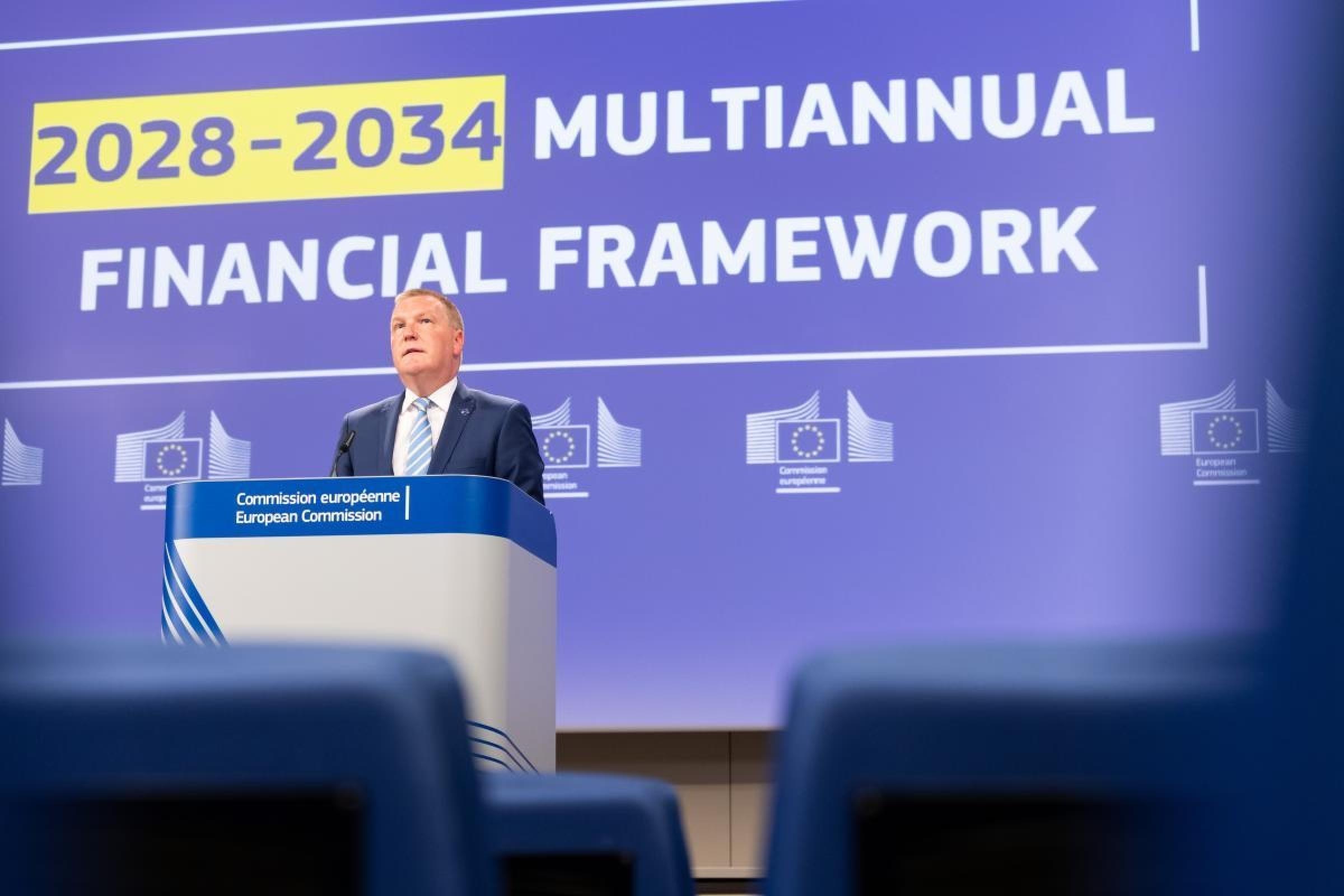

European institutions are aligning behind a major expansion of EU-level fiscal powers in the next Multiannual Financial Framework (2028-2034). Alongside a larger budget, Brussels is proposing a new set of “own resources” — revenues collected directly through mechanisms linked to large corporations, carbon emissions, tobacco products, and environmental levies. Officially, these proposals are presented as necessary to repay the debt accumulated under NextGenerationEU and to finance new European priorities. In reality, they represent a gradual shift toward a permanent EU-level taxing capacity.
That would fundamentally change the Union, from a body financed by member states into one with its own fiscal interests and incentives for continuous expansion. The risks are not only economic. Taxation would become further detached from national democratic accountability, moving key fiscal decisions away from national parliaments and voters.
This is not the first such attempt. Similar debates accompanied the previous MFF in 2018, when the European Commission proposed own resources linked to plastics, carbon pricing, and corporate taxation. Many of those ideas failed, were diluted, or later reappeared in another guise after the launch of NextGenerationEU. The current package belongs to that longer-term push to build autonomous fiscal capacity at the EU level, not to any temporary response to exceptional circumstances.
That is why the debate over EU revenues is not merely technical — it is fundamentally political. A different approach is both possible and necessary. This week, EPICENTER, the European network of free-market think tanks, publishes its Alternative Multiannual Financial Framework, a chapter-by-chapter response to the Commission’s €1.76 trillion proposal.
The alternative caps EU spending at roughly one percent of GNI, or €1.54 trillion over seven years, around €220 billion below the Commission’s proposal and close to €400 billion below the European Parliament’s position. It shows that the Union can meet every treaty obligation, support Ukraine, fund research, and maintain cohesion without granting Brussels new permanent revenue streams.
The principles underpinning it are simplicity, transparency, fiscal neutrality, and clear limits on centralization. Rather than layering on multiple new own resources, the EU should rely on a limited number of clearly defined contributions linked to member states’ economic capacity. That is much closer to the Union’s original financial architecture.
New revenue instruments should not distort economic behaviour, duplicate national taxation, or disproportionately affect specific sectors or member states. On those grounds, the proposed Corporate Resource for Europe (CORE) should be reconsidered and ultimately withdrawn. Its design, based on turnover rather than profitability, raises serious concerns about economic incidence, competitiveness, and neutrality, while introducing a new form of EU-level taxation without a clear link to the Union’s core functions.
The proposed (non-collected) e-waste own resource should also be dropped. Presented as an environmental incentive, it depends on continued failure to meet existing collection targets, a misalignment between environmental objectives and fiscal incentives that adds a fiscal layer to an already complex framework without improving outcomes.
Excise duties on tobacco are harmonized at the EU level to support the internal market and address cross-border distortions, not to serve as a basis for supra-national revenue. Partial centralization would have uneven fiscal effects across member states, depending on tax structures, consumption patterns, and exposure to illicit trade. In general, for the tobacco excise framework to effectively support the functioning of the single market, the future framework — to be discussed alongside the next EU budget — should both harmonize minimum excise standards in a way that reflects differences in purchasing power across Member States. It should also embrace the principle of differentiated taxation between combustible tobacco products and lower-risk alternatives.
Revenues linked to the EU’s Emissions Trading System (ETS) and Carbon Border Adjustment Mechanism (CBAM) warrant caution. They are connected to EU-level regulatory frameworks but using them as budgetary resources risks turning regulatory instruments into fiscal tools. Any allocation should remain limited, clearly justified, and designed so as not to undermine its primary function or burden the European economy.
What is striking is that the push for new revenues no longer appears tied to any specific instrument. The emerging logic in Brussels is that if one proposal fails politically, another should replace it. The European Parliament has already endorsed this approach, backing the Commission’s “basket approach” and suggesting alternatives ranging from digital levies and online gambling taxes to broader CBAM revenues and crypto-related taxation.
This reveals the deeper institutional mindset. The objective is no longer simply to finance temporary obligations, but to secure a growing and permanent stream of autonomous EU revenues. Yet European cooperation does not require permanent fiscal centralization. The EU budget should remain simple, limited, and fiscally neutral.
The Union should not evolve into a centralized fiscal authority with independent incentives to expand spending and taxation over time. It should focus on the functions that require common European action, maintaining the single market, supporting free trade, and protecting the external borders.
Europe’s competitiveness problems will not be solved through an ever-growing system of centralized transfers and new taxes. They will be solved through regulatory reform, stronger private investment, and a more open and competitive economic environment. Simplicity, fiscal neutrality, and limits on centralization are not anti-European principles. They are essential conditions for a sustainable, accountable, and competitive European Union.