
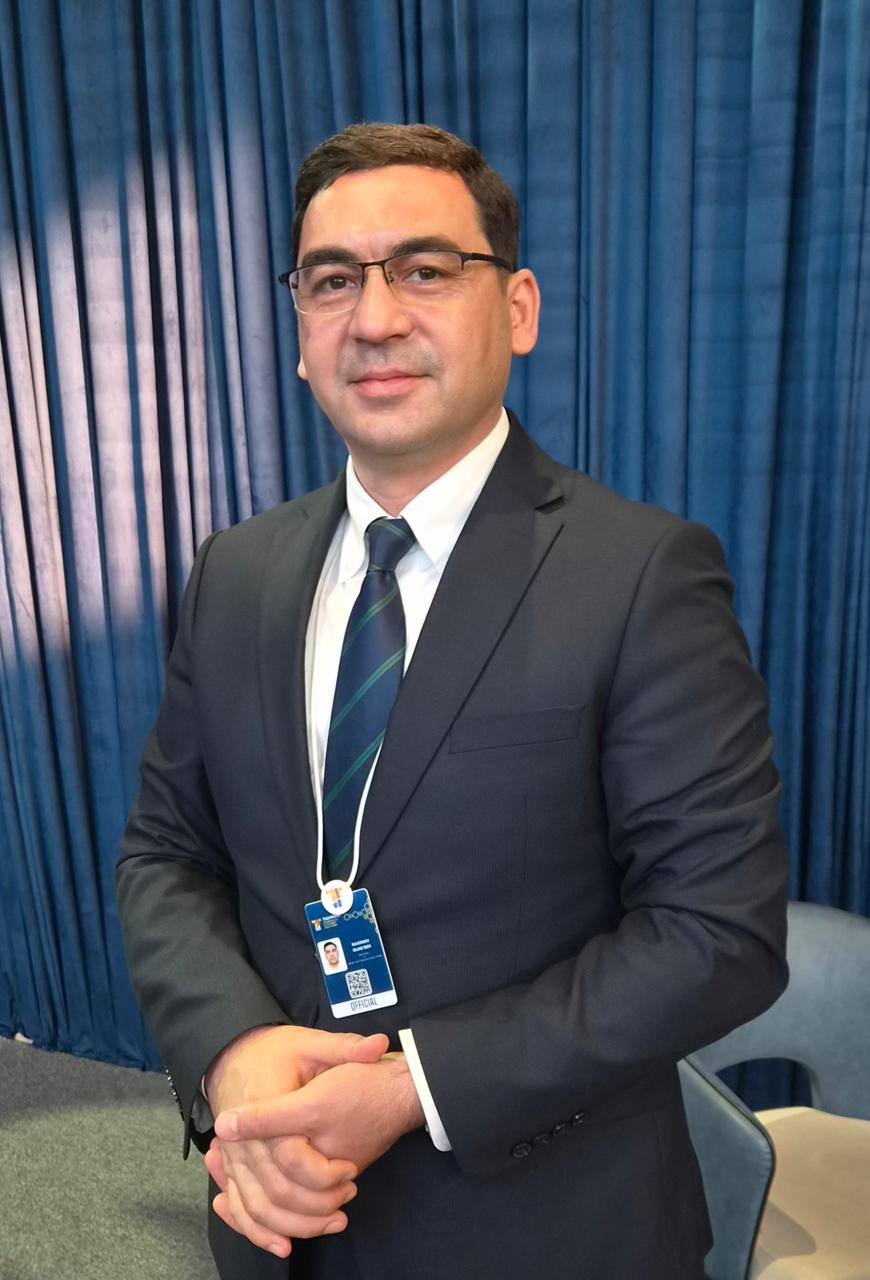
During the Tashkent International Investment Forum (TIFF 2026), held in Uzbekistan’s capital from June 16-18, NE Global conducted an exclusive interview with Rahimov Ulugbek Tursunboevich, Chairman of the Mining and Geology Association of the Republic of Uzbekistan. He explained in detail the increasingly important role of critical minerals and the cooperation on strategic minerals, rare earths and natural resources between Europe and Uzbekistan — one of the fastest-transforming markets in Central Asia and globally –also considering other global partners.
NE Global (NEG): Critical minerals are a very important part of this forum. What is Uzbekistan’s potential in this field?
Rahimov Ulugbek Tursunboevich: I think that there is great potential in terms of critical minerals. We can definitely say that gold, silver, copper and partly lead and zinc have been refined, but this polymetal ore usually contains critical minerals like iridium, germanium, strontium, uranium and other minerals that might be very useful in terms of getting them and working them out.
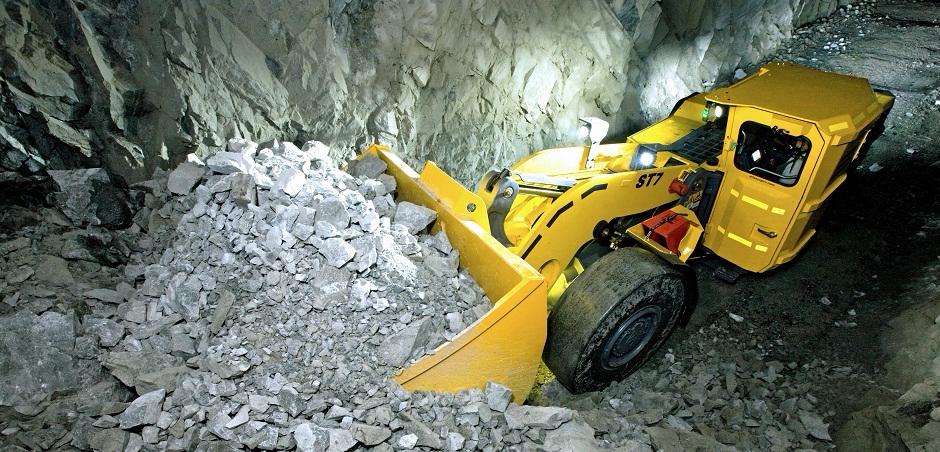
Recently only Almalik mining company was able to extract the uranium, unfortunately because of the lack of technological solutions, other metals cannot be processed as well. Uzbekistan is open to find capable partners who can help to extract other minerals that can be sold along with gold, silver or other ores.
NEG: After this stage, do you think Uzbekistan could export, or will this be only for the internal market?
RU: Of course, the critical minerals are usually used for different high-tech spheres, and for now Uzbekistan has developed some of them. We also started producing some vehicles, and home appliances and equipment, but we are not able to utilize the whole volume of these kinds of minerals. In any case, we will think about exporting for sure, but in this term, government reforms are focusing on creating something valuable.
NEG: How do you see the cooperation especially with Europe?
RU: First, we are open to create joint ventures, in this case the cooperation provides a win-win situation for both sides. That is, when Uzbekistan companies can get technological solutions, get investment and get new markets. During the presentation, for example, I mentioned tungsten. The metal might be used for creating hard metal and metals that are used for different kinds of equipment, a segment in which Germany has a leading position within the world. Recently, for example, China has had a huge influence on the whole tungsten market by closing its borders to exports. I think that we would be a really good alternative for the German factories that are producing something from high-grade metals.
NEG: Have you heard something about Italy?
RU: The same I can say about Italy. For all the cooking equipment Italy is the first choice, because in terms of cooking stuff, Italy is number one. But not just that, there might be other spheres like boats, vehicles and other production equipment. We are trying to implement the same plan with Italian companies as well, so that we can become an alternative to Chinese metal as well. They kind of force you to buy the ready product but, if you want to find some other source for getting the raw materials, Uzbekistan might be quite a good opportunity.
NEG: Which are the most important critical materials that Uzbekistan can offer, and which of those can be extracted more efficiently?
RU: That’s not a question; that’s already a fact. The first one is gold; the second one is copper. We are in the leading position on those two. We are also planning to increase that. Our president set the goal to increase gold production up to 150 tons per year and, because of this disposition, we encourage any international company to come to Uzbekistan. For example, I already have on my portfolio at least 10 complete projects that are going to be examined. Some of them are the brownfields that require building up the factory, setting up the extraction line; some of them are greenfields. The cost of the investment, of course, will be different: the greenfields might be quite cheap in this sense. If you compare us with other European countries or maybe Canadian project portfolios, we are the cheapest. As I said in my presentation, this is the perfect time to invest in Uzbekistan, in 10 years it already might be a bit late.
NEG: And then you have silver, of course.
RU: We have silver, we have lead, we have zinc, antimony, cobalt…We have other metals that I don’t know how to pronounce in English, but the idea is that you can easily send a request and we will try to find something interesting exactly for you. The strategy is quite simple.
Just to provide equal opportunity to the companies, as many as possible. The competition is very good in terms of getting the highest-grade technological readiness and the best and cheapest investment. The competition can rule the market and our government is thinking how to provide awareness about the opportunities just to provide more requests and get more companies involved.
NEG: You have China, the U.S., and Russia. How important is Europe in this game?
RU: I think that China in the mining is dominating. We also don’t want to be just one country counterpart. We are looking for diversification, so that’s why we strongly encourage Europe, U.S. and other regions of the world to be involved in this game.
You have to be in a huge range of different countries’ partnership. In all spheres, for example, uranium has Chinese investment, but at the same time we have investment from France. We are waiting from U.S. companies. “In any sphere, as much as possible”, it must be our motto.
NEG: As you said, uranium is one of Uzbekistan’s assets. How do you see the future?
RU: If we focus on uranium, Uzbekistan itself has a great knowledge and experience. We have been working with uranium for at least 50 years on a production scale. At the same time, we are looking for other areas outside of the country to expand our activities while looking out for capable counterparts who can bring something new to the market. New in terms of mining, also in terms of refining and extracting. It is very important to extract as much as possible. This highly affects the project’s economy. That’s one point.
The second point is also careful use of subsoil. We are working on how to attract companies with good experience that can provide a complex solution, not just extract solely one metal, but extract as many as possible. I am participating in this project, we know we have a good content of cadmium and other rare metals, but they have not been extracted yet. The company still spends money for mining, digging, mounting, and for refining, but if you extract more, the overall cost of your ready metals might be much cheaper.