

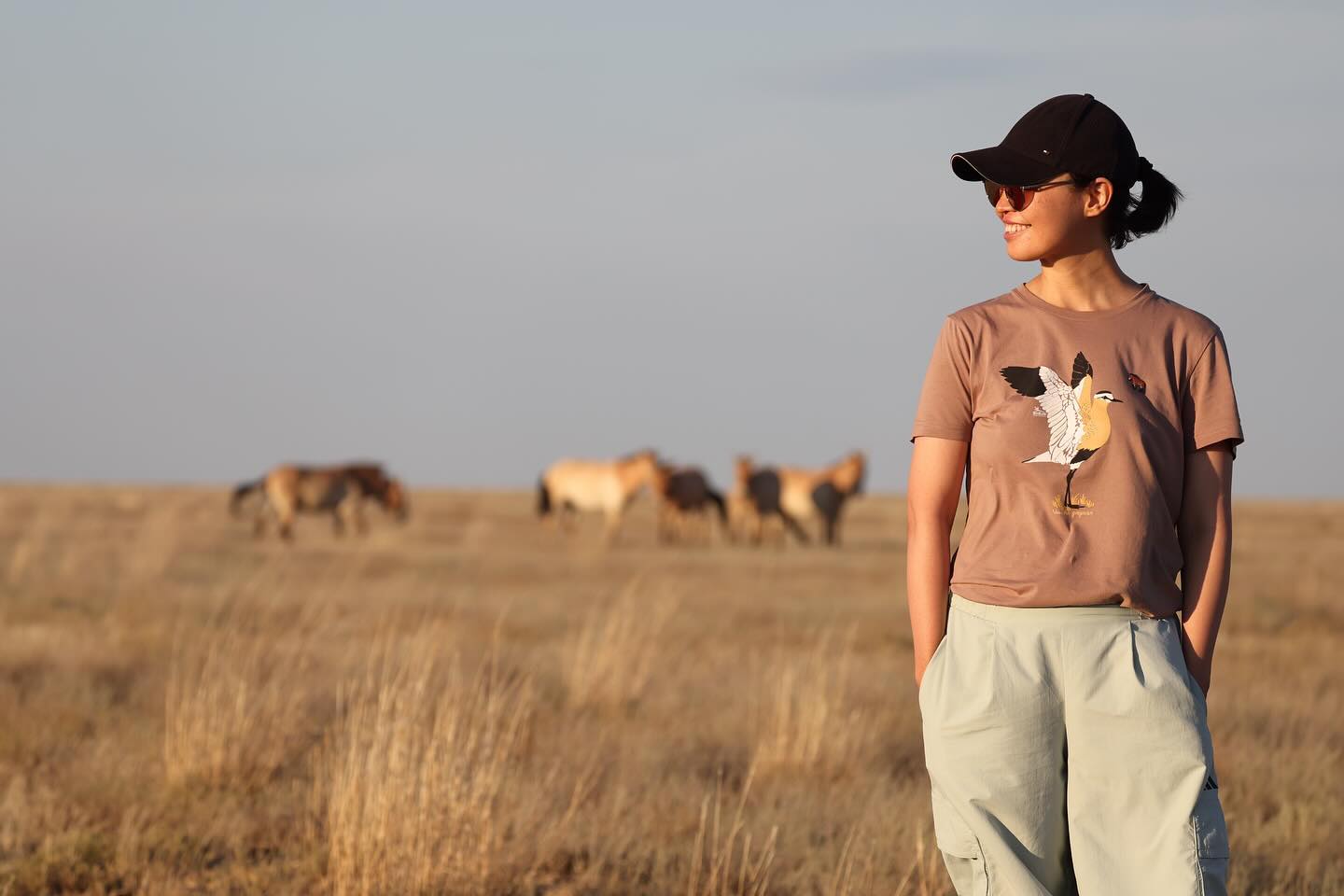
Zulfiya Suleymenova, Ambassador-at-Large of the Kazakh Foreign Ministry, sat down with NE Global in Astana, Kazakhstan, to discuss the outcomes of the Regional Ecological Summit (RES 2026) as well as ongoing efforts to strengthen integrated water management, protect water recourses, including the shrinking Caspian Sea, biodiversity and boost transboundary cooperation across Central Asia and globally.
According to Suleymenova, one of the very important takeaways from RES 2026 on April 22-24 was the declaration by the heads of state of Central Asian countries, identifying key areas of further cooperation in the region to move forward and address the joint challenges. Another plan that was also announced by some of the presidents was the creation of the joint work program towards 2030, focusing on transforming pressing ecological and climate challenges into concrete, investment-ready, and bankable infrastructure and green development projects across the region, she said, adding that Central Asian countries also agreed to strengthen cooperation on the cryosphere, energy transition, biodiversity and conservation.
Suleymenova, who has held senior positions in government and international organizations, including Minister of Ecology and Natural Resources, consultant for UN regional programs and Special Representative of Kazakhstan’s President for International Environmental Cooperation, said the Kazakh government is putting lots of trust in young people. “The President, very rightly said that we put lots of trust in our volunteers, in young people, in really taking the responsibility,” she said referring to Kassym-Jomart Tokayev’s opening address at the summit on April 22.
“I believe that our young people, they are better,” Suleymenova said, smiling. “And they will take care of our planet, and I think it is our responsibility to make sure that we create the right platforms through which they can implement their ideas,” she added, noting that taking care of the planet and living in balance with nature have been formally incorporated in Kazakhstan’s new Constitution, recently passed in a national referendum. “Basically, that means that they are not just the laws, but the fundamental principles by which the country will be living,” she said.
Restoring the Aral Sea
Turning to the well-known environmental catastrophe in the Aral Sea, she said restoration efforts are underway to revive Kazakhstan’s North Aral Sea. “Kazakhstan’s portion has transformed, and the people are coming back to the villages. I’ve been to several villages around the sea, and the families are coming back. That means that people leave the villages, not because they want to leave. They leave when they don’t have opportunities when the environment is degrading. But if you’re bringing back the environment, the sea and the opportunities in terms of dignified livelihood, jobs, and so on, people are ready to live in those areas because they see their identity very closely linked to those places,” she said.
“I would really recommend you try to visit the Aral Sea. In 2024, we had the One Water Summit jointly with France. It was an initiative of our President and the President of France and at that time, we visited jointly with the French team. We went to the glaciers and then from the glaciers moved back to the sea, and we saw the Aral Sea, we spoke with the local people, and our idea was to really show what is happening, why we say glaciers are important, how they are connected to the Aral Sea, how that is changing the life,” Suleymenova said.
Kazakhstan is restoring its portion of the Aral Sea through water conservation and more efficient use, sending more water towards the ecosystem preservation.
The Ambassador-at-Large noted that during RES 2026, there was a meeting of the International Fund for Saving the Aral Sea (IFAS) at the level of the heads of state. Kazakhstan was concluding its three-year-long presidency. “We were also sharing what had been accomplished in the last three years, and one of the things that was also proposed is to really have one of the days dedicated to commemorating the Aral Sea,” she said.
The Caspian Sea is shrinking
“The Kazakhstan portion of the Caspian Sea is shallower compared to the, for example, to the portion in Azerbaijan, and therefore any changes in the sea level are immediately felt and seen and observed on the Kazakhstan portion,” she said, adding that about 98 percent of the Caspian seals, the only marine mammal of Central Asia, are in Kazakhstan portion of the sea and their number has been decreasing.
“Kazakhstan is the only country in the Caspian region who is dedicating the funds for the research of the Caspian seals at the state level. So, we have been doing it very consistently for many years,” she said. “We observe the seals, not only as a species to be preserved, but also as an indicator of what is happening in the sea, because we can see whether the environmental conditions are changing,” she said.
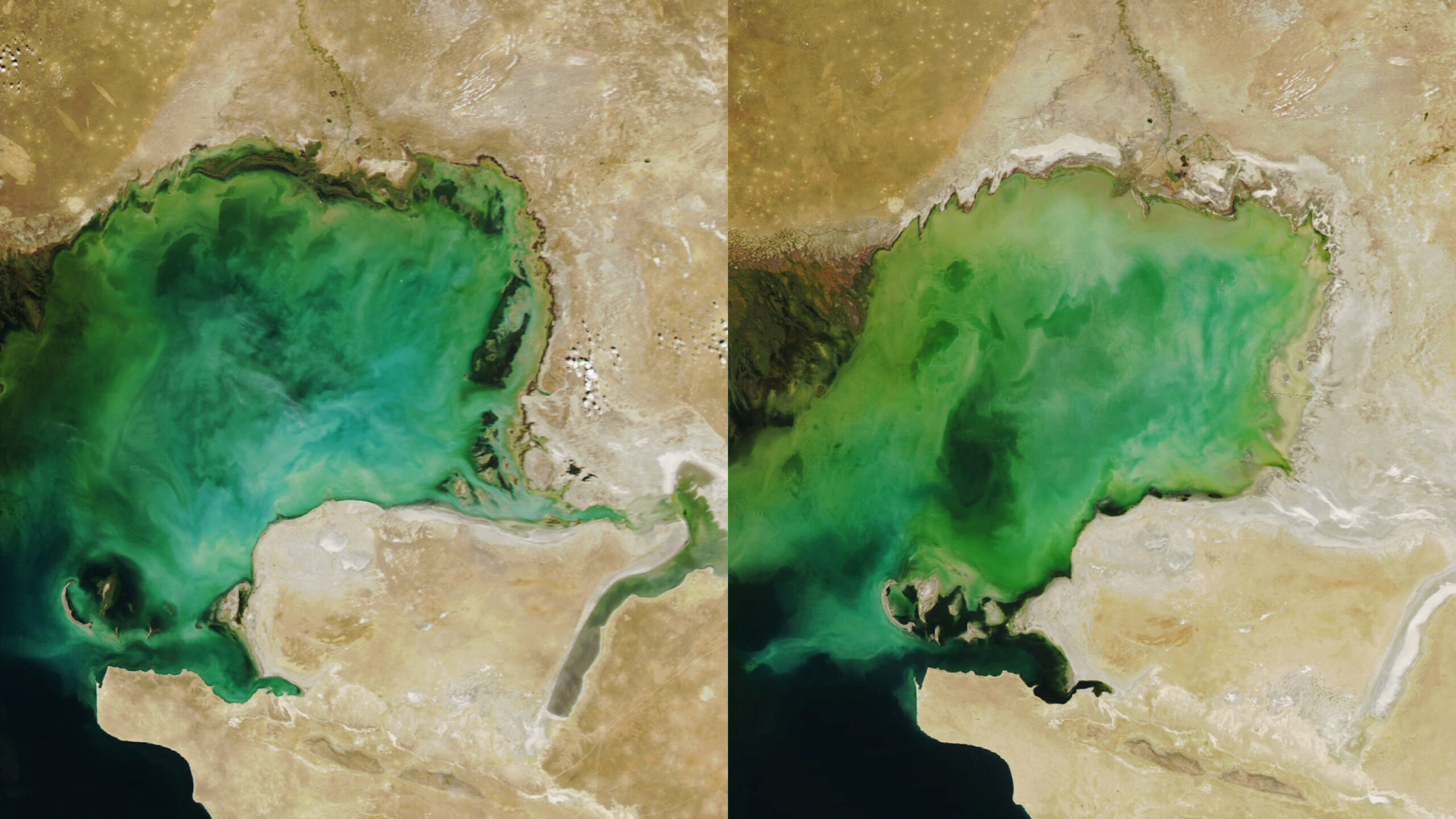
She stressed that the Caspian Sea is very important for the transport corridors, for the economic development, for the identity of the population, but at the same time also for the preservation of the biodiversity. “We see this issue in a very complex, comprehensive manner, and we definitely would like to make sure that the Caspian Sea does repeat the fate of the Aral Sea, that we preserve it, and we leave it for the future generations to see and enjoy,” she said.
Accelerating decarbonization
Another significant outcome of the 2026 Regional Ecological Summit in Astana was the launch of Kazakhstan’s national investment platform, QaJET (Qazaqstan Just Energy Transition) to accelerate decarbonization, Suleymenova said.
A memorandum of understanding (MoU) was signed by Kazakhstan’s Minister of Energy Yerlan Akkenzhenov, Minister of Ecology and Natural Resources Yerlan Nyssanbayev, and EBRD Managing Director, Central Asia and Mongolia, Hüseyin Özhan. The MoU establishes the foundation for cooperation with international financial institutions, donors, philanthropic organizations and private investors supporting QaJET’s implementation.
“We have been working on this for several years, actually, and I’m very happy that it is now materializing, and hopefully, it will be supporting Kazakhstan’s ambitions on the energy transition. “Over 80 percent of our emissions come from the energy sector. So, in essence, decarbonization for us is energy transition. The more we can mobilize investments into this sector, and can bring technologies and solutions here, that the more we can really demonstrate concrete results in the decarbonization,” she said.
Protecting biodiversity
Suleymenova said the example of the Saiga antelope is one of the best ones in the world. Backed by international conservation groups and donors, Kazakhstan has guided the remarkable comeback of the Saiga antelope. “We are proposing to remove the zero quota, because the population now needs to be managed safely, because otherwise, if it is too much, then it exceeds the operating capacity of the natural landscapes, and then you have other risks that are emerging,” Suleymenova said, adding that the rapid growth started to put severe pressure on the operating capacity of the Eurasian steppe.
“Kazakhstan has proposed a system through which will be doing all the tracking and making sure that nothing goes into the gray markets, where we can naturally track it. So, we have been working very closely with CITES (the Convention on International Trade in Endangered Species).
According to Kazakhstan’s CITES proposal, removing the current zero quota in the international commercial trade in “saiga derivatives” from Kazakhstan would help meet demand for horns and reduce poaching.
“I was also meeting just prior to this, with one of the executives of CITES where it was mentioned that this is one of the very few global examples where we are removing certain species from having these strict protections to the area where we are able to manage them,” she said, adding, “So, I think these are some of the examples, which are coming from here, that we will be able to share with the rest of the world.”