


In early 2026, an Israeli official discussing the India–Middle East–Europe Economic Corridor (IMEC) described Jordan’s concern that IMEC could divert cargo from the Port of Aqaba. He explained that important Jordanian domestic interests might suffer. He also stated that addressing these concerns was essential for IMEC’s successful launch.
This article responds to that official and to others in the IMEC signatory countries who share this worry. A possible solution draws on U.S. experience with similar port‑related concerns. That experience includes the expanded application of the U.S. Harbor Maintenance Fee, which offers lessons relevant to this case.
Jordan’s priorities versus IMEC
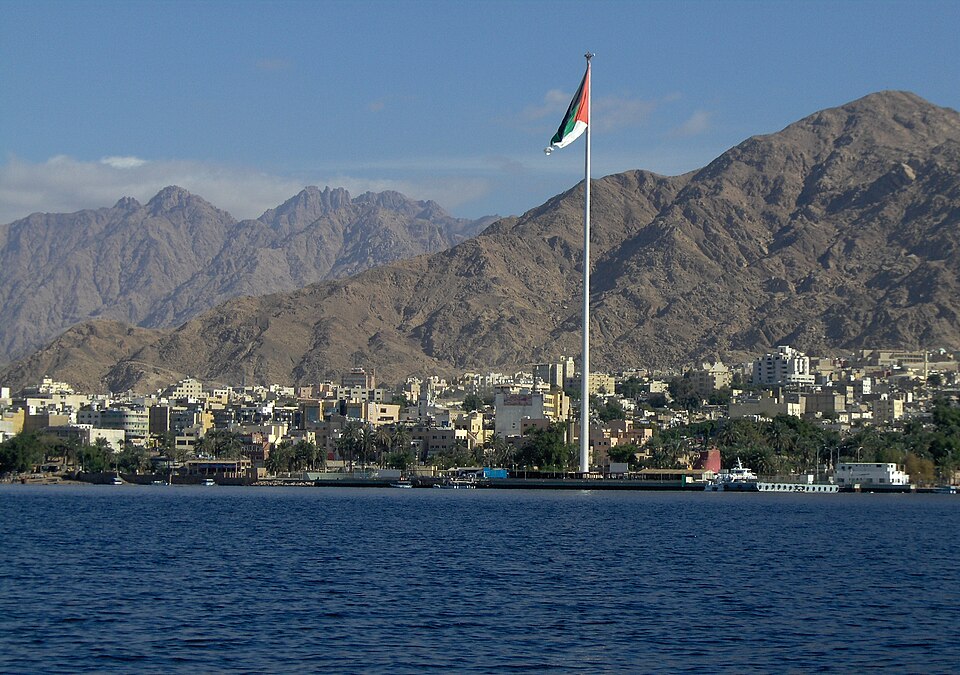
IMEC is primarily viewed as a land corridor for moving containerized goods from India toward Europe. A secondary effect may alter how importers bring goods into Jordan. About 40 percent of Jordan’s imports currently enter through Aqaba’s port.
Under IMEC, importers might choose routes via ports in the United Arab Emirates or Saudi Arabia. Such routes would bypass Aqaba completely. As Jordan’s only seaport, Aqaba is a vital economic asset. It generates customs revenue, terminal fees, and income from railways and trucking. It also supports storage, brokerage, inspection, and related employment.
Port of Aqaba’s economic and social importance
We can make reasonable inferences about the Port of Aqaba’s importance to Jordan. In 2024, container ships arriving at the Aqaba Container Terminal delivered 427,000 imported containers and removed 109,000 for export. Trucking, closely tied to the port, employs more than 100,000 Jordanians directly and indirectly. It represents about 7.2 percent of national employment. Much of that transportation business follows a corridor linking Aqaba, Amman, and Iraq.
Parallels with American concerns about U.S. ports
Jordan’s economy is structurally more constrained than its neighbors. Data from 2024 show that its 11 million inhabitants generate a GDP of about $53 billion. Israel’s 10.2 million citizens produce about $540 billion. Monthly household income in Jordan differs similarly, from about $1,000, compared with about $5,200 in Israel. Material changes to Aqaba’s fiscal and commercial contribution to the Jordanian economy could affect families dependent on port activity. Those changes may cause political or social stress. Although IMEC will invariably expand Jordan’s commercial prospects, decision-makers remain cautious about changes that might disrupt local expectations.
Jordanian concerns and similar American concerns
Jordan’s focus on Aqaba parallels similar issues confronting American politicians. At Seattle’s port, stakeholders complained that cargo was bypassing the U.S. system: goods arrived in Canada, then entered the United States by truck. As a result, Seattle’s operations lost activity.
The U.S. Harbor Maintenance Fee
The U.S. government responded on April 9, 2025, when U.S. President Donald Trump issued Executive Order 14269. It broadened the application of the U.S. Harbor Maintenance Fee. The Trump administration required U.S. Customs to collect the fee on goods entering the U.S. by land after they had passed through Canadian or Mexican ports.
The fee is 0.125 percent on imported goods. The Executive Order also imposed a 10 percent processing charge. The measure appears to approximate the opportunity cost of routing imports through foreign ports rather than U.S. ports. For Jordan, a fixed fee imposed on transit cargo could reasonably help capture direct and indirect benefits that are otherwise lost when cargo transits the country rather than entering through the Port of Aqaba. Imposing a transit fee on all cargo crossing Jordanian territory could address internal concerns practically and with minimal complexity.
Although Jordanian and American circumstances differ, an underlying political and fiscal logic is shared. Nations with strategic ports need to protect infrastructure from what can be called “bypass risks.” In Jordan’s case, safeguarding Aqaba is even more crucial since it has only one port.
An IMEC transit charge for Jordan
The American example points toward Jordan’s challenge with IMEC. The United States protected revenue from routing through foreign ports. Jordan likewise can guard against IMEC routes that might bypass its port facility.
Economic efficiency differs from political feasibility. Political compromises can introduce fees that serve broader social aims. The U.S. Harbor Maintenance Fee demonstrates how such fees align fiscal and political interests. The American precedent offers Jordan a model for collecting fees on cargo that does not touch Aqaba.
IMEC’s infrastructure and political bargains
IMEC is more than a set of ports, roads, and rail lines. It is also a constellation of political bargains shaped by national and local interests. Maintaining credibility requires balancing strategy, trade efficiency, and social legitimacy.
Jordan’s concerns about Aqaba should stand at the center of corridor planning. They are not peripheral issues. An efficiently managed corridor can respect both economic ambition and community welfare.
Policymakers who integrate fiscal and societal realism into IMEC’s structure will improve its stability. Doing so increases the likelihood that the corridor will operate as intended.