
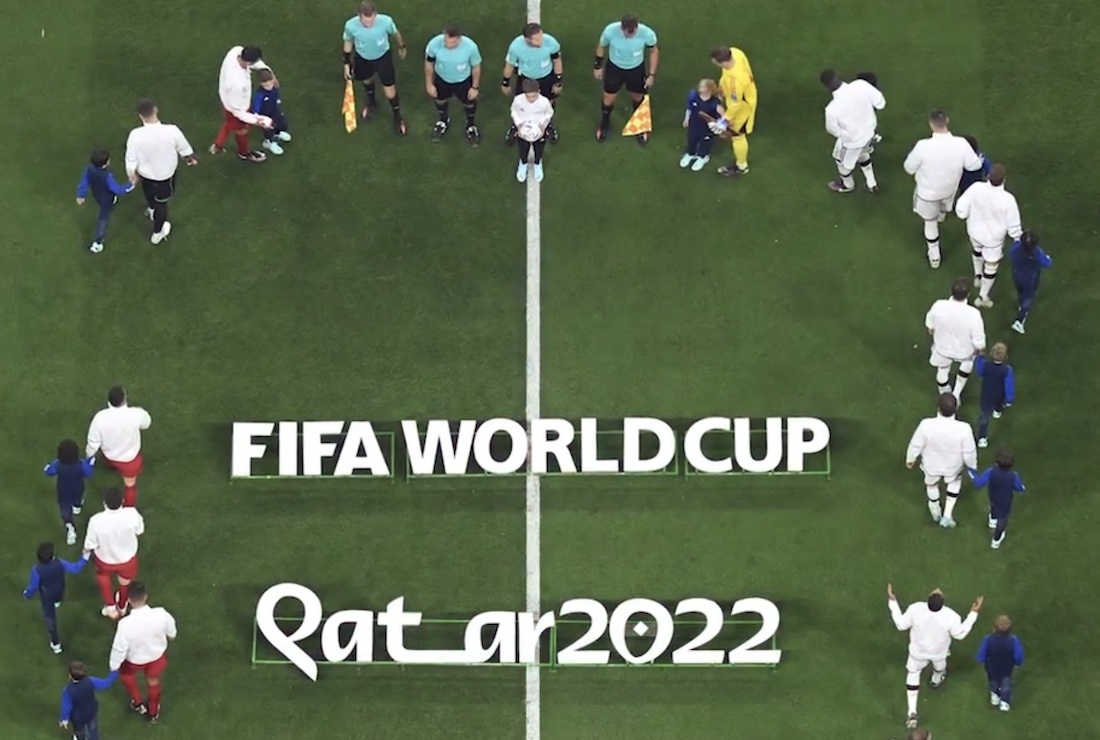

For Qatar, the 2022 FIFA World Cup did not end with the final whistle at Lusail Stadium; it marked the beginning of a more consequential chapter concerned with what kind of sporting nation the country intends to become. Three and a half years on, that question is being answered incrementally, event by event, with the direction of travel becoming clearer by the season.
When Qatar was awarded the World Cup in 2010, external commentary tended to reduce the bid to a statement of geopolitical intent: a small, wealthy Gulf state using sport to purchase international legitimacy. Experts nevertheless argued that this required a more structural reading: countries like Qatar were deploying football as a form of geopolitical economy, shaped by globalization, digitalization, and shifting energy markets, and that the sport itself could no longer be understood in isolation from those forces. That analytical lens remains useful. What has changed is the evidence base, which has grown considerably.
Qatar’s post-2022 events calendar reflects confidence earned during the World Cup preparation period. The AFC Asian Cup, hosted in early 2024, offered the first significant test of the country’s ability to pivot from FIFA’s global machinery to a different federation’s requirements, a different audience, and a compressed timeline. That it proceeded with strong attendances and operational coherence was the dividend of accumulated experience and retained institutional knowledge.
Qatar’s response to 2022 was to keep its hosting apparatus operational and adaptable, rather than allow it to dissolve once the cameras departed. That this resolve held firm against the backdrop of the devastating regional conflict that has convulsed the Middle East since late February is itself telling. The decision to press forward with the sporting calendar, while simultaneously playing an active diplomatic role in efforts toward a ceasefire, demonstrated to the country’s leadership and the wider world a resilience that goes well beyond sport. It signaled that Qatar’s long-term strategic direction would not be derailed by regional turbulence, and that confidence, once earned, is not easily surrendered.
The pipeline ahead tells its own story. The FIBA Basketball World Cup in 2027 is followed by the Volleyball World Championship in 2029 and the Asian Games in 2030; a sequence that spans multiple sports, multiple governing bodies, and the better part of a decade. Crowning it all is Qatar’s ambition to host the Olympic and Paralympic Games in 2036, which would represent the most significant sporting undertaking in the country’s history and a definitive marker of where this long-term strategy has been heading all along. And everything that follows that landmark event will continue to shape the nation (its citizens, residents, and visitors) well into 2050 and beyond. This is the architecture of a hosting culture, consciously constructed and deliberately sustained.
Sustainability in sport has too often been treated as an environmental checklist: carbon offsetting, green infrastructure ratings, waste management targets, to name but a few. These matter, and Qatar has invested in them, not least through the influential entities operating under Qatar Foundation’s umbrella. The more durable dimension, however, is institutional: the retention of expertise, the embedding of sport within national development frameworks, and the cultivation of domestic participation alongside elite spectacle. It is here that one of the most significant — and underreported — aspects of Qatar’s evolving approach comes into focus: the institutionalization of women’s participation across the sport ecosystem.
Efforts are now underway to build a coherent pathway for women and girls in Qatari sport, extending from grassroots engagement through to elite competition. This goes beyond participation numbers or symbolic representation. The ambition is structural: developing the governance frameworks, coaching pipelines, and community infrastructure that would allow women’s sport to grow organically and sustainably across all levels. Initiatives are beginning to give this ambition operational form, and the direction aligns closely with the broader solidarity principles that have featured in Qatar Foundation’s own public discourse around sport.
A country that aspires to host the Olympic and Paralympic Games will be judged, in part, on whether that aspiration is matched by inclusive domestic sporting development in the years preceding it. That consistency is worth holding in mind as the world prepares for a World Cup of an entirely different character.
The 2026 tournament, taking place across the United States, Canada, and Mexico, will be the largest footballing event ever staged. It is geographically dispersed, logistically complex, and politically layered in ways that a compact host like Qatar never had to navigate.
Where the 2022 edition unfolded with all eight stadiums within an hour’s drive of one another (i.e., fans able to move between matches on the same day, a single rhythm shared across the host city), the 2026 model asks supporters, broadcasters, and national delegations to follow the tournament across borders, time zones, climates, and jurisdictions.
For Doha, there is something instructive in observing what a distributed hosting model reveals: the difficulty of maintaining a coherent event narrative, the challenges of equitable benefit distribution across regions and host cities, and the risk that scale dilutes the very solidarity the tournament is meant to celebrate. Whether the tri-host format ultimately reinforces or strains football’s stated commitment to global unity will be one of the defining questions of the summer and a reference point against which all subsequent bids, Qatar’s own ambitions included, may quietly be measured. Qatar’s focused, nationally integrated approach offers a different answer to the question of what hosting a major sporting event can accomplish. It is a program in motion, and one whose most important chapters are still being written.