

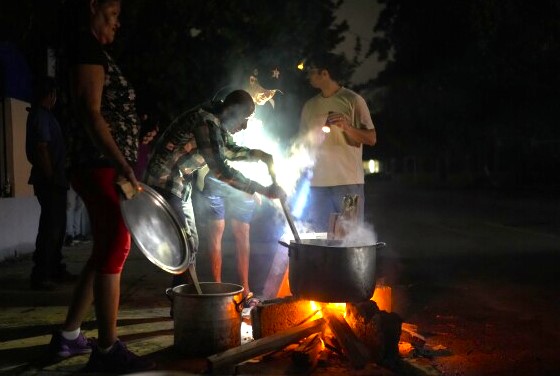

Under unrelenting U.S. economic pressure, the Cuban economy in the first five months of 2026 has deteriorated into what many observers describe as the island’s worst crisis since the 1990s “Special Period” after the Soviet Union’s collapse. The key difference in 2026 is that this crisis is broader: energy, transport, food distribution, tourism, foreign exchange earnings, and state finances are all under simultaneous stress, made worse by an expanding wave of new U.S. sanctions, piled on top of the unilateral U.S. commercial embargo which has long been in place.
Under the administration of U.S. President Donald Trump, Washington has sharply increased pressure in 2026, targeting Cuban officials (highlights below) and discouraging — but not blockading — fuel shipments to the island, primarily through its recently acquired control of Venezuela’s oil industry, meaning that Venezuela is no longer subsidizing Cuba at previous levels.
At the same time, Russia offers only limited support, and China remains cautious about large-scale bailout financing while providing only token assistance. Ultimately, this leaves Havana with very limited external lifelines other than international humanitarian support groups.
The energy sector appears to be the critical pressure point, despite occasional small “humanitarian” oil shipments via Mexico, and limited other material assistance deliveries from Spain and Brazil and through the UN. If fuel imports do not recover meaningfully, Cuba could face even longer nationwide blackouts during the summer of 2026.
While Cuba is indeed reeling economically, and parts of the economy are already operating below subsistence levels, the highly centralized Cuban system has historically proven more resilient than many outside predictions assumed.
Outlook grim, but regime collapse not assured
The most probable near-term outlook is for continued economic deterioration, accelerating infrastructure decay, growing emigration, intermittent humanitarian emergencies, and periodic social unrest, rather than sudden regime overthrow.
It should not be assumed that a cascading failure of electricity, food distribution, and public health systems — while capable of generating massive media coverage — will force the definitive political collapse most Cuba-watchers in Washington and Miami are hoping for and actively pressing for in social media announcements.
It also remains to be seen what special role U.S. Secretary of State Marco Rubio, himself of Cuban origin, can carve out if an organized and bloodless transition to democracy can ultimately be negotiated. Rubio delivered a video message to the people of Cuba on May 20, reaffirming the unwavering support of the United States for the Cuban people in their pursuit of freedom, dignity, and self-determination. In his message, Rubio addressed the continued suffering endured by the Cuban people after 67 years of tyranny, censorship, and human rights abuses by the illegitimate regime.
It should be clear to all that a success in Cuba will boost Rubio’s presidential ambitions in 2028.
Also on May 20, the Trump administration announced criminal charges against former Cuban President Raul Castro, now 94 years old. Castro is accused of ordering the shooting down of two planes carrying U.S.-based Cuban exiles on a humanitarian mission in international airspace near Cuba in 1996.
On May 21, Secretary Rubio ordered the arrest of Adys Lastres Morera, a Cuban national with strong ties to the communist regime in Havana, following the Department of State’s termination of her lawful permanent resident (LPR) status. Morera is the adult sister of Ania Guillermina Lastres Morera, who was sanctioned earlier in May for her role as the Executive President of GAESA (Grupo de Administración Empresarial S.A.). GAESA is the Cuban military-controlled financial conglomerate.
According to the State Department, Morera is the senior-most GAESA executive responsible for managing GAESA’s illicit international assets, which it states “are used to to fuel the lavish lifestyles of Castro family members and other regime elites, and to finance overseas influence operations as part of Cuba’s long-standing ambition of a global communist revolution.”
Fresh sanctions announced
On May 18, the U.S. State Department sanctioned Cuba’s Interior Ministry and the Policia Nacional Revolucionaria (PNR), a Cuban police force accused of operating mobile prisons and suppressing protests. Treasury’s Office of Foreign Assets Control (OFAC) also sanctioned the Directorate of Intelligence of Cuba, or DI, which is the main state intelligence service of the Cuban government.
Following is a list of some of the most senior officials targeted on May 18 by the U.S. Treasury and State Departments (pursuant to Executive Order (E.O.) 14404):
Mayra Arevich Marin, a member of the Communist Party Central Committee who has served as Minister of Communications since April 2021.
Juan Esteban Lazo Hernandez, president of the Cuban National Assembly and a longtime Communist Party official and member of the Politburo.
Roberto Tomas Morales Ojeda, a senior Communist Party leader, who previously served as Minister of Public Health and Vice President.
Joaquin Quintas Sola, a General in the Cuban Army and Vice Minister of the Revolutionary Armed Forces.
Raul Villar Kessel, a senior Cuban military officer.
A number of other lower-level figures were also designated. The State Department has said additional sanctions are expected in the coming days and weeks.
On May 1, Trump signed an executive order that provides broad authority to designate parties in Cuba’s key economic sectors and also crucially authorizes secondary sanctions against foreign financial institutions that deal with sanctioned parties.