

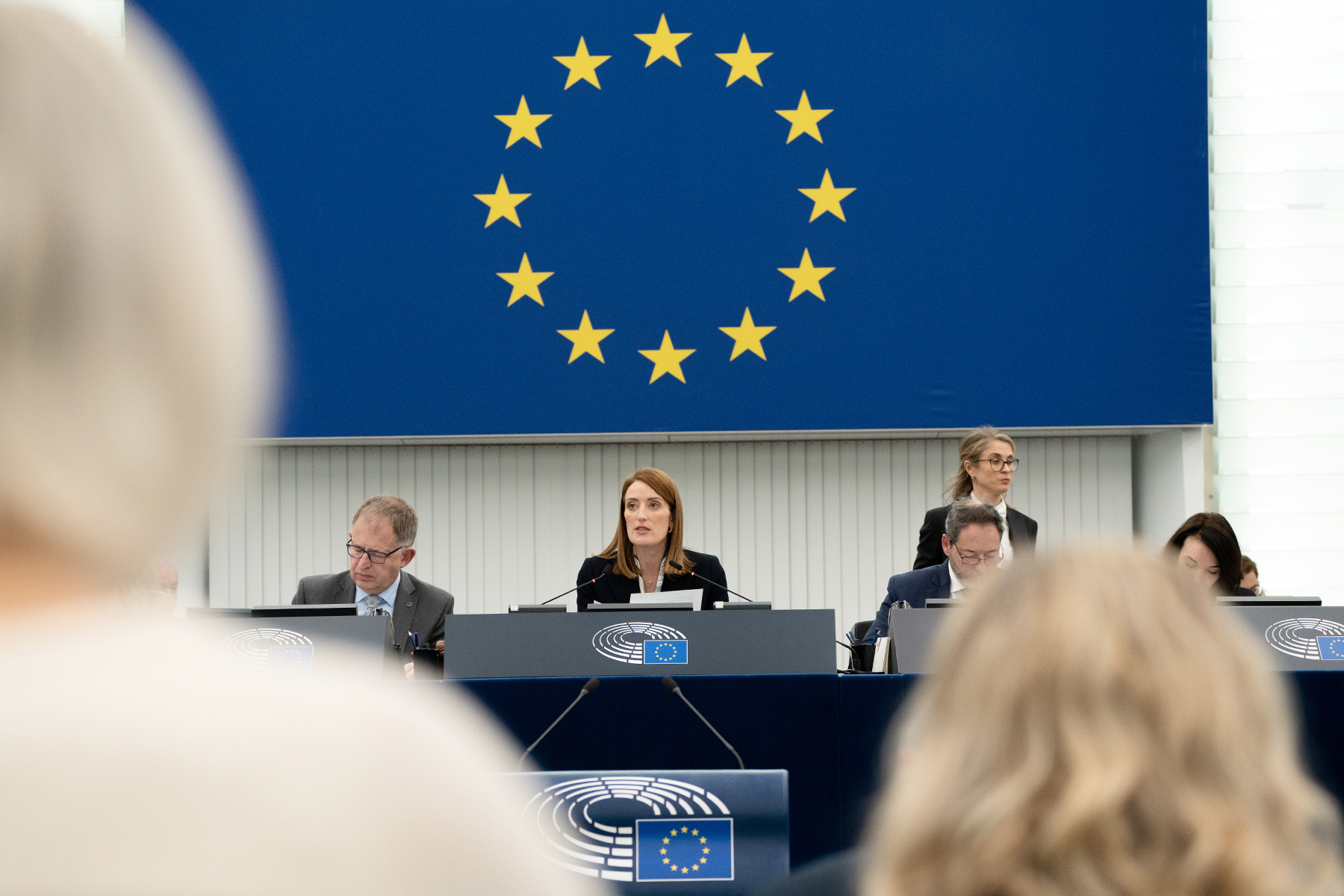

Following a vote by the European Parliament on February 10, the EU will have to reduce greenhouse gas emissions by 90 percent in 2040 compared with 1990 levels, to achieve a climate neutral EU by 2050.
Members of the European Parliament backed a political agreement with Council on amendments to the EU Climate Law by 413 votes to 226 and 12 abstentions, to include a new, intermediate and binding 2040 EU climate target of reducing net greenhouse gas (GHG) emissions by 90 percent compared to 1990 levels, the European Parliament said in a press release.
The European Climate Law makes the goal of climate neutrality by 2050 a legally binding obligation for all EU member states. It also establishes a legally binding target for the EU to reduce net GHG emissions by at least 55 percent by 2030, compared to 1990 levels.
The revised climate law introduces flexibilities for EU member states in how the 2040 target can be met. From 2036, up to five percentage points of net emissions reductions (two percentage points more than proposed by the European Commission) can come from high-quality international carbon credits from partner countries. MEPs included safeguards to prevent the funding of projects contrary to the strategic interests of the EU, the Parliament said.
Introduction of ETS2 postponed until 2028
The text also includes the possibility for domestic permanent carbon removals to be used to compensate for hard-to-abate emissions in the EU’s Emissions Trading System (ETS) as well as enhanced flexibility within and across sectors and instruments to achieve targets as cost effectively as possible, as the green transition and improving EU competitiveness should go hand in hand.
The introduction of the EU’s ETS2 is also postponed by one year, from 2027 to 2028. ETS2 will cover CO2 emissions from fuel combustion in buildings and road transport.
Review of the 2040 target
The European Commission will assess progress towards the target every second year, in view of up-to-date scientific data, technological developments, and the state of the EU’s industrial competitiveness. It will also consider trends in energy prices and their repercussions for both businesses and households and assess the status of net removals at the EU level compared with what is necessary to meet the 2040 goal, the European Parliament said.
Following the review, the Commission may propose an amendment to the EU climate law, which could involve modifying the 2040 target or taking additional measures to strengthen the supporting framework – for instance to safeguard the EU’s competitiveness, prosperity, and social unity.
Once Council has endorsed the text, it will enter into force 20 days after it has been published in the EU Official Journal.
Meanwhile, the European Commission has launched two open public consultations and calls for evidence for the preparation of the EU climate policy framework for the period after 2030, focusing on the role of national climate targets and flexibilities and on the possible use of international credits, the Commission said on February 9 in a press release, adding that these consultations will play a critical role in shaping the preparation of the relevant legislative proposals due in the last quarter of 2026, as announced in the Commission Work Program. The Commission encourages broad participation from all stakeholders and the general public in these two consultations, which remain open until May 4.
The consultation will help assess the role of national climate targets and flexibilities in the EU climate policy post-2030, with a view to sustaining strong incentives for emission reductions and carbon removals in line with the EU’s 2040 climate target. Respondents are asked for their input on how to review the EU’s future climate rules to make sure they are fair, affordable, and adapted to different national situations while ensuring achievement of our climate targets, the Commission said. Consultations also cover the role of carbon removals and ways to give countries more flexibility and EU support, so all regions and economic sectors can move towards a climate-neutral economy.
Reducing exposure to increasing climate hazards
According to a new study commissioned by the Directorate-General for Climate Action (DG CLIMA) and funded under Horizon Europe, the EU, its Member States and the private sector should invest about €70 billion per year until 2050 in climate adaptation, to reduce exposure to increasing climate hazards and improve resilience.
Investing in adaptation and resilience has become more urgent than ever as the trend towards warmer global temperatures continues and the socio-economic costs of climate-related events keep rising, the Commission said in a press release.
The study released on January 23, which focuses on adaptation investment needs and abstracts from the costs of climate-related events, is the first of its kind and fills an important knowledge gap. It uses a common methodology to estimate investment needs in adaptation for the EU and all Member States individually, looking into the risk clusters identified in the 2024 European Climate Risk Assessment (EUCRA) and into individual adaptation measures at the EU and Member State level.
The study finds that of the annual €70 billion that need to be invested in adaptation, about €30 billion are needed for infrastructure, €21 billion for ecosystems and €12 billion for food security.
France, Italy, Germany and Spain have the largest adaptation investment needs, in part due to their geographic and economic size. The study also finds that the scale and types of investments needed vary significantly across Member States, depending on individual country characteristics.
The study stresses that the current supply of adaptation finance is insufficient and that investing in adaptation delivers co-benefits, including for climate mitigation. While the study represents a major step forward in understanding the scale and nature of adaptation investment needs, it emphasizes that better data on adaptation costs is necessary.
Finally, the study stresses that further work is required to assess needs under a range of climate scenarios, desired resilience targets and residual risks, and to evaluate cost-benefit ratios for adaptation measures.