Russia to construct first gas pipe to Turkey, mulls second line to EU

Putin wants guarantees pipe to EU will be exempt from Third Energy Package

- Advertisement -

Russian gas monopoly Gazprom moved ahead with plans to build the Turkish Stream gas pipeline with the first line to Turkey to be constructed by a Swiss company while the second line to Europe remains uncertain.

South Stream Transport BV, which is in charge of gas pipeline Turkish Stream construction, signed a contract with Allseas Group SA for construction of the first line of the offshore section of Turkish Stream with an option for construction of the second line, TASS quoted Gazprom as saying on December 8.

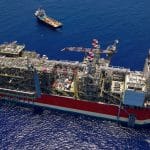
Under the contract, Allseas must lay more than 900 kilometres of pipes on the seafloor, using the world’s largest construction vessel Pioneering Spirit. “Allseas will start laying the first line in the second half of 2017,” the report said.

“We need to build two pipes in the south,” Konstantin Simonov, the general director of the Russian National Energy Security Fund in Moscow, told New Europe by phone on December 6. “The question is the route of these pipes because one pipeline is out of question and today [Turkish President Recep Tayyip] Erdogan signed this agreement,” he added.

Erdogan signed the bill on December 6 to ratify Ankara’s deal with Moscow on Turkish Stream, Sputnik reported. The draft law was passed earlier by the Turkish parliament. Russia and Turkey signed an intergovernmental agreement on the pipeline on October 10. Two strings will carry each an annual 15.75 billion cubic metres of Russian natural gas to Turkey across the Black Sea.

“For sure Gazprom will build the second pipe but the question is will it be through Turkey or it can go through Bulgaria and then to Greece,” Simonov told New Europe. “We have seen some political changes in Bulgaria but the question is what will be the situation with this pipeline through Bulgaria. I mean it will be the exemption of Third Package or something like this. Because [Russian President Vladimir] Putin said that we can return to Bulgaria but we need some strong 100 percent guarantees,” Simonov said, referring to the EU’s Third Energy Package that blocked Gazprom’s initial plans to build the South Stream gas pipeline, prompting Russia to announce the launch of Turkish Stream in December 2014 as an alternative.

Gazprom CEO Alexei Miller sounded a confident note about the construction of the second line of Turkish Stream to Europe on December 6, saying, “Construction of the offshore segment of Turkish Stream will start in the second half of 2017.” “Both lines, the first one and the second one, will be put into service by 2019 year-end,” TASS quoted Miller as saying. The construction contractor has not yet been selected for this project, he added.

The feasibility study of entry points of Turkish Stream to EU territory is close to completion and “the border of Turkey and Greece is currently the priority destination of gas supplies to Europe. To this end, gas transport facilities in Turkey with the length of about 500 kilometres should be built. Gazprom has an agreement with Edison and DEPA on the Poseidon project – this is one of option for continuation of gas deliveries over the Turkish Stream in the EU territory for end consumers”.

follow on twitter @energyinsider

- Advertisement -

Subscribe to our newsletter

Co-founder / Director of Energy & Climate Policy and Security at NE Global Media

Latest

Europe risks doubling down on its big green mistake

John Maynard Keynes once said that when the facts...

Washington takes the reins of the G20 for 2026

Starting on December 1, the United States took the...

Mining in Iran: A problem that affects the oppressed Azerbaijani population

Two noteworthy events took place between late October and...

Stronger EU Arctic strategy needed to counter Russia and China

As the Arctic region is becoming a key geopolitical...

Don't miss

Europe risks doubling down on its big green mistake

John Maynard Keynes once said that when the facts...

Washington takes the reins of the G20 for 2026

Starting on December 1, the United States took the...

Mining in Iran: A problem that affects the oppressed Azerbaijani population

Two noteworthy events took place between late October and...

Stronger EU Arctic strategy needed to counter Russia and China

As the Arctic region is becoming a key geopolitical...

Ten country statement on Libya stresses potential for unification

A strong, unified Libya is in everyone’s interest. A...

Ten country statement on Libya stresses potential for unification

A strong, unified Libya is in everyone’s interest. A significant number of major powers have come together to emphasize an important new opportunity for...

COP30 in Belém misses key targets but advances on secondary objectives

After two weeks of intense negotiations in a new geopolitical reality, COP30 concluded in the Amazon city of Belém, Brazil, where countries agreed on...

Another Russia-tilting Trump peace proposal emerges

President Donald Trump apparently has no more refined strategy than to disrupt the flow of world business/diplomacy with an outrageous opening salvo to make...

Azerbaijan Railways emerges as a neutral and reliable bridge between East and West

After a recent trip to Baku, NE Global Media interviewed Azerbaijan Railways (ADY) Chairman Rovshan Rustamov, focusing on his organization's critical strategic role regarding...

New U.S. Terrorist Designations in Europe and Latin America

As the U.S. Government shutdown has ended, a number of temporarily closed foreign affairs offices/functions have just re-opened, and we should expect to see...

Watering down U.S. Russia sanctions for Hungary – what was gained?

For a while, it appeared as if the war in Ukraine was again a top priority in the White House, but ultimately that turned...

Cyprus, Greece, Israel and U.S. commit to deeper East Mediterranean energy cooperation

Following the 3+1 Energy Ministerial, Cyprus, Greece, Israel and the United States declared common intent to promote energy security and cooperation in the Eastern...

Serbia’s energy dilemma: How to break from Russia and save its stability

Serbia’s energy “decoupling” from Russia seems to be on the horizon. The Southeast European nation, long heavily dependent on Russian gas -- and, to...