

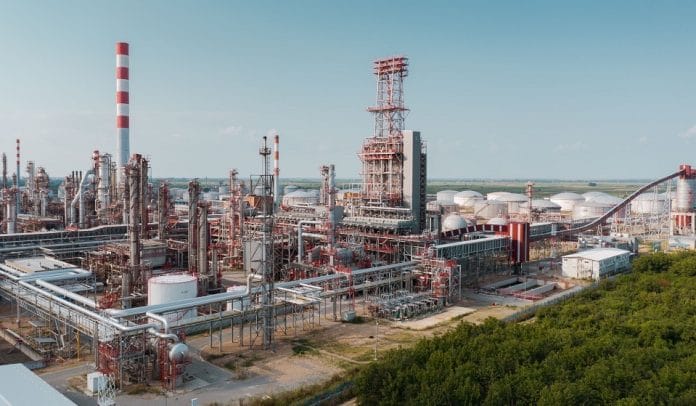

Serbia’s energy “decoupling” from Russia seems to be on the horizon. The Southeast European nation, long heavily dependent on Russian gas — and, to a lesser extent, oil — now faces a difficult situation that threatens to trigger a serious energy crisis.
The United States’ decision, announced back in January 2025 under then-President Biden, to impose a broader sanctions package targeting Russia’s oil sector has hit Serbia particularly hard. Although Washington’s major target was the Petroleum Industry of Serbia (NIS) — 44.85 percent owned by Russia’s Gazprom Neft, with Serbia’s government holding a 29.87 percent stake and St. Petersburg-based Intelligence, a company ultimately controlled by Gazprom, owning 11.3 percent — it is the Balkan nation that is expected to pay the highest price, as the sanctions complicate crude imports and disrupt refining operations.
Although the U.S. Treasury Department, at Serbia’s request, had repeatedly postponed sanctions on NIS, allowing the Balkan nation to potentially nationalize the energy corporation, they finally came into force on October 9. As a result, the country could soon face a fuel crisis since its only oil refinery is also majority-owned by Gazprom. Reports indicate that the facility will operate only until November 25. After that, to avoid fuel shortages, Belgrade is expected to begin importing refined petroleum products, most likely from Hungary. However, such a measure could further drive up fuel prices, which are already among the highest in Europe.
Traditionally, Serbia was receiving crude via the JANAF pipeline, which carries it from the Adriatic port of Omisalj in Croatia. From there, the pipeline runs eastward across the former Yugoslav republic and crosses the border into Serbia, supplying crude primarily to NIS’s refinery in the city of Pancevo. But to avoid legal risks — such as secondary sanctions or being directly cut off from U.S. financial systems — JANAF halted the crude oil supply to NIS.
Belgrade now faces a difficult choice: either take control of NIS and risk straining its relations with Moscow, or wait, hoping that the Kremlin will eventually decide to sell its stakes in the company — whether to Serbia or another actor. According to Serbian President Aleksandar Vucic, Moscow takes the situation seriously and is reportedly looking for a partner for NIS.
President Vucic has repeatedly stated that Belgrade will not nationalize the company.
Initially, Vucic reportedly feared that if the Serbian government took control of NIS, the Kremlin might respond by cutting gas supplies to the Southeast European nation. But Serbia is unlikely to continue receiving Russian gas anyway. The European Union’s plan to end Russian gas imports and transit from 2026 — primarily affecting countries without long‑term Gazprom contracts — could make Belgrade’s energy cooperation with Moscow virtually impossible.
Fully aware of the EU’s impending “energy divorce” from Russia, Vucic sought to sign a three-year gas import deal with Moscow back in October, hoping a long-term contract would secure supplies — just as Hungary’s has, allowing Budapest to keep buying Russian energy until 2028. However, according to the Serbian leader, the Kremlin declined to sign a long-term gas deal with Belgrade, offering instead a new contract valid only until the end of the year.
In spite of that, Vucic still refuses to nationalize NIS, saying he “cannot guarantee” to the United States that he will take control of the company, as he is “neither a communist nor a fascist” and has “never taken property from anyone.” In reality, Vucic either has private arrangements with the Kremlin, which is why he fears potential consequences, or he is hesitant to nationalize NIS because he knows most of his voters, who are strongly pro-Russian, would oppose it.
Still, as a master of political technology, he is likely to gradually shift into a pro-Western mode. His latest statement that Serbia is ready to supply ammunition to “anyone in Europe” clearly suggests that Belgrade might soon lift its ban on weapons exports, which it imposed following alleged pressure from the Kremlin.
It is an open secret that Serbia, despite being the only European country that has not joined anti-Russian sanctions, was supplying ammunition to Ukraine via third countries. If Moscow really refused to sign a long-term contract with Belgrade, and Gazprom does not want to sell its stakes in NIS to the Serbian government, Vucic could continue arming Ukraine while blaming the Kremlin for forcing him closer to the West.
In parallel, he will have to find a way to address a potential energy crisis. If, starting in January 2026, Serbia can no longer rely on Russian gas, the consequences for its economy could be severe. It will take at least a couple of years to build the necessary infrastructure for the Balkan nation to begin receiving larger volumes of natural gas, as well as liquefied natural gas, from other producers.
Meanwhile, for Vucic, it will be crucially important to find someone to blame. Given that, for his voters, he is seen as a leader who “successfully balances” between the West and Russia, he can easily accuse both sides of putting Serbia in an impossible position.
But with anti-corruption protests ongoing for over a year, the last thing he needs is a serious energy crisis. Time no longer seems to be on his side, and the era of “balancing” may be coming to an end — a turning point that could redefine Serbia’s place between Russia and West.