
The Kosovo Parliament’s December 14 vote to formally create a military structure triggered the almost-automatic UN Security Council (UNSC) face off December 17 in New York. Nobody was expecting a resolution of the issue in this UNSC debate, but both Serbia and Kosovo remain open to continuing dialogue on normalising relations, the ongoing process of which is a prerequisite to both countries moving toward EU accession.
Tensions remain high
Political friction in the area has been elevated for several weeks. On November 21 Kosovo announced new tariffs on goods imported from Serbia and Bosnia, increasing them from ten to 100 percent. Reacting to this, Mayors of four Kosovo Serb-majority regions of northern Kosovo announced their resignations, and the parliaments of their municipalities cut off official communications with the capital, Pristina. In this tense environment, Pristina’s December 14 vote to create a formal military establishment only exacerbated tension.
Kosovo in the UN – still in limbo
Despite almost 20 years of UN presence on the ground, Kosovo is not a UN member, thanks largely to Serbian and Russian opposition. Most UNSC debates on Kosovo issues founder on differing interpretations between the western UNSC members (US, UK, France) and Russia of UN Resolution 1244, promulgated after the 1999 war there. Not much changed in the December 17 session.
Security Council face off
UN Under-Secretary-General for Peacekeeping Operations, Jean-Pierre Lacroix called on both sides to avoid taking steps that could worsen the situation in Kosovo.
Russian UN Permanent Representative Vasily Nebenzia characterized the December 14 vote as a violation of UNSCR 1244 and noted “the resolution contains an absolutely clear demand on the demilitarisation of any armed groups of Kosovo Albanians and authorises the presence – on the territory on Kosovo – exclusively of a multinational contingent under international control.” Nebenzia also stated “The emergence of Kosovo armed forces represents a threat to peace and security in the region, fraught with a repetition of the armed conflict.”
The US was represented at the Kosovo debate by the US Mission’s Political Coordinator Rodney Hunter. In recent years, the United States has actively supported the transformation process for the Kosovo military in the hopes of managing it closely. Hunter noted at the outset “The United States reaffirms its support for the gradual, transparent transition to a professional, multiethnic, NATO-interoperable force that serves and reflects all of Kosovo’s communities.”
Hunter dealt with the UNSCR 1244 legacy clearly and stridently, noting “The legislation passed by Kosovo’s Assembly last week is fully in line with UNSC Resolution 1244. It is the sovereign right of Kosovo to establish and maintain an armed force.”
Hunter continued “Resolution 1244 authorised the establishment of an international security presence in Kosovo and charged it with demilitarising the Kosovo Liberation Army and other armed Kosovo Albanian groups. These provisions do not apply to the Kosovo Security Force. The Kosovo Security Force is neither the “KLA” nor an “armed Kosovo Albanian group.” The Kosovo Security Force is a separate, multiethnic force established following Kosovo’s 2008 independence, which the International Court of Justice clearly ruled in 2010 did not violate international law or Resolution 1244.”
Belgrade and Pristina make their case
Serbian President Aleksandar Vucic called on the UN to take a bigger role in the ongoing work to normalize relations between Belgrade and Pristina, stating “Serbia is always ready to resume the process of dialogue.” Vucic told the UNSC that no international document authorises Pristina to form its own army. “Unexpectedly, they got huge support for that from Western countries,” Vucic complained.
In the debate, Kosovo’s President, Hashim Thaci, stated that his country is a sovereign nation and as such had an unquestioned right to form its own army. “If Kosovo made a mistake it is only that it waited for five years … to establish an army.” Thaci added: “It is belated because we waited for goodwill from those who never showed goodwill towards Kosovo.”
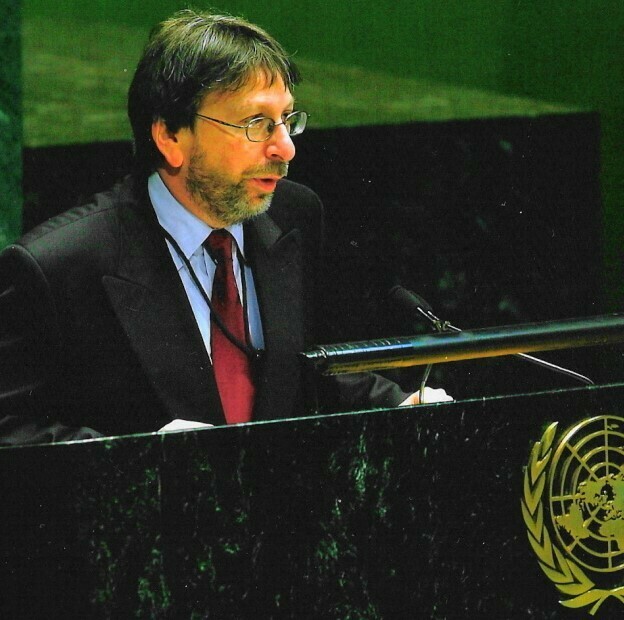
UN face off over Kosovo army vote
An unusual debate airs concerns, but no solutions found
- Advertisement -
- Advertisement -