

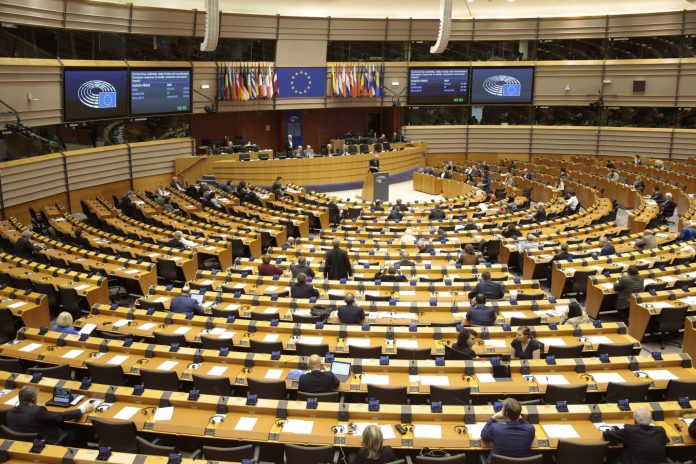

The EU has a complex ratification process when it comes to the enforcement of bilateral free trade deals. The Trade and Sustainable development agreements, in which Free Trade Agreements (FTAs) are included, require the active involvement of each member of the EU – namely to ratify said agreements in their national parliaments. These kinds of agreements are the so-called mixed competencies agreements, in which both EU institutions and the members of the bloc are committed to act simultaneously.
Given this national ratification requirement, Free Trade Agreements concluded by EU institutions remain inapplicable for those parts accounting competencies of the 27 individual members of the EU, such as the investment protection agreement in FTAs with Singapore and Vietnam, since the ratification from domestic parliaments is often delayed. Our recent paper Raising Barriers outlines that between 2012 and 2019 the European Union negotiated and concluded thirteen FTAs or Association Agreements, which required approval from the national parliaments. However, Greece has ratified only four of them (30%), while Italy and Spain have ratified ten out of thirteen each (77%).
There are several reasons that explain why the Free Trade Agreements are not a priority for the legislative agenda of the national parliaments in Europe. Firstly, most FTAs contain liberalizing provisions, which expose the regional producers to international competition and they may result in downward pressures on domestic wages and jobs in the short run. These developments can have a direct negative impact to local producers and manufacturers and in the labour market. Moreover, the environmental requirements of the FTAs should be in line with the EU’s green policy, but in many cases, agreements with countries that do meet these criteria still raise strong opposition by environmental interest groups. In addition, the academic evidence suggests that trade issues – in particular on the European Union level – are not relevant to the national legislative agenda, since the interest of the public is more focused on regional and domestic challenges.
Though these concerns might be reasonable to an extent, the overall impact of trade liberalisation compensates for the short-term losses. The benefits of free trade are undeniable according to the majority of economists, even if they acknowledge that certain gains and losses are not spread evenly. 85% of the top economists of the Initiative on Global Markets at the University of Chicago agree that “freer trade improves productive efficiency and offers consumers better choices, and in the long run, these gains are much larger than any effects on employment”.
Academic literature has also provided a series of empirical evidence on why free trade without unnecessary regulations makes the participants better off. In fact, it has been found that the EU trade agreements from 1993 to 2013 have, on average, increased the quality of imported goods by 7% without affecting prices or variety, resulting in a cumulative reduction in consumer prices equivalent to savings of €24 billion per year for EU consumers.
Nevertheless, political parties in national parliaments face certain difficulties when they need to promote free trade policies. Despite the benefits identified by the economists, the losses are concentrated in the short-run but the gains are dispersed in the medium-long run. Consequently, given the high level of clientelist networks and patronage in Southern Europe, political parties are pressured by interest groups that oppose policies that might directly harm their vested interests.
The key factor influencing parliamentarians’ vote for a Free Trade Agreement seems to be the participation in government. If a political party is part of the governing majority or if it has governed in the past, it usually tries to employ a more mainstream economic policy near the center of the political spectrum, as well as to better align with the country’s international partners and institutions. On the other hand, the main factor of opposing a Free Trade Agreement in parliament seems to be if a political party employs a populist discourse. Authoritarian populist parties according to Timbro’s classification seem to oppose Free Trade Agreements to the greatest extent.
A series of policies can be developed to overcome the changes and raise the barriers to trade in European Union. Some of them could rely on a more transparent and open consultation process when EU institutions conclude Free Trade Agreements, in order for more political actors to be engaged in that process. Other policies could include more involvement of local authorities as national and regional economic chambers and committees. These local institutions can enlighten the relevant stakeholders regarding the benefits from the EU’s free-trade policies, as well as inform them of possible resource re-allocation to more productive economic activities.
In addition, the role of MEPs seems to be beneficial, since EU citizens often see themselves as very distant from their elected MEPs. The MEPs’ active participation as people’s representatives in the domestic political arena explains why a certain EU policy that should be enacted and enforced could bring the people closer to those policies, mitigate the opposition and suggest solutions to the reasons they are against.
The European Union has regularly been accused of having a ‘democratic deficit’, however in the FTAs case, these mixed capabilities give an extended role to the EU’s members, while their national governments are able to intervene and even terminate an agreement. Even though these mixed capacities seem to ensure that the national representatives have an important and final say in the overall negotiation and ratification process of FTAs, this procedural requirement slows down and even blocks mutually beneficial agreements.
A policy tool for tackling those challenges is to conclude two separate agreements for the same trade partnership, one with including EU exclusive competencies only and another one with the shared competencies, which needs the national (and sometimes regional) ratification. In fact, the EU institutions chose this policy in their agreements with Singapore, Japan and Vietnam. Although, the problem is not completely solved, at least a big part of the agreement can enter directly into force, while the other part with the shared competencies can be provisionally applied until its final ratification.
Incentivising the EU’s members and citizens to prioritize the long-term benefits of trade, rather than just focus on short-term, selective losses is important if the EU wishes to remain an important global economic force. Free trade can bring a much-needed boost to the EU economy after a decade of economic stagnation.