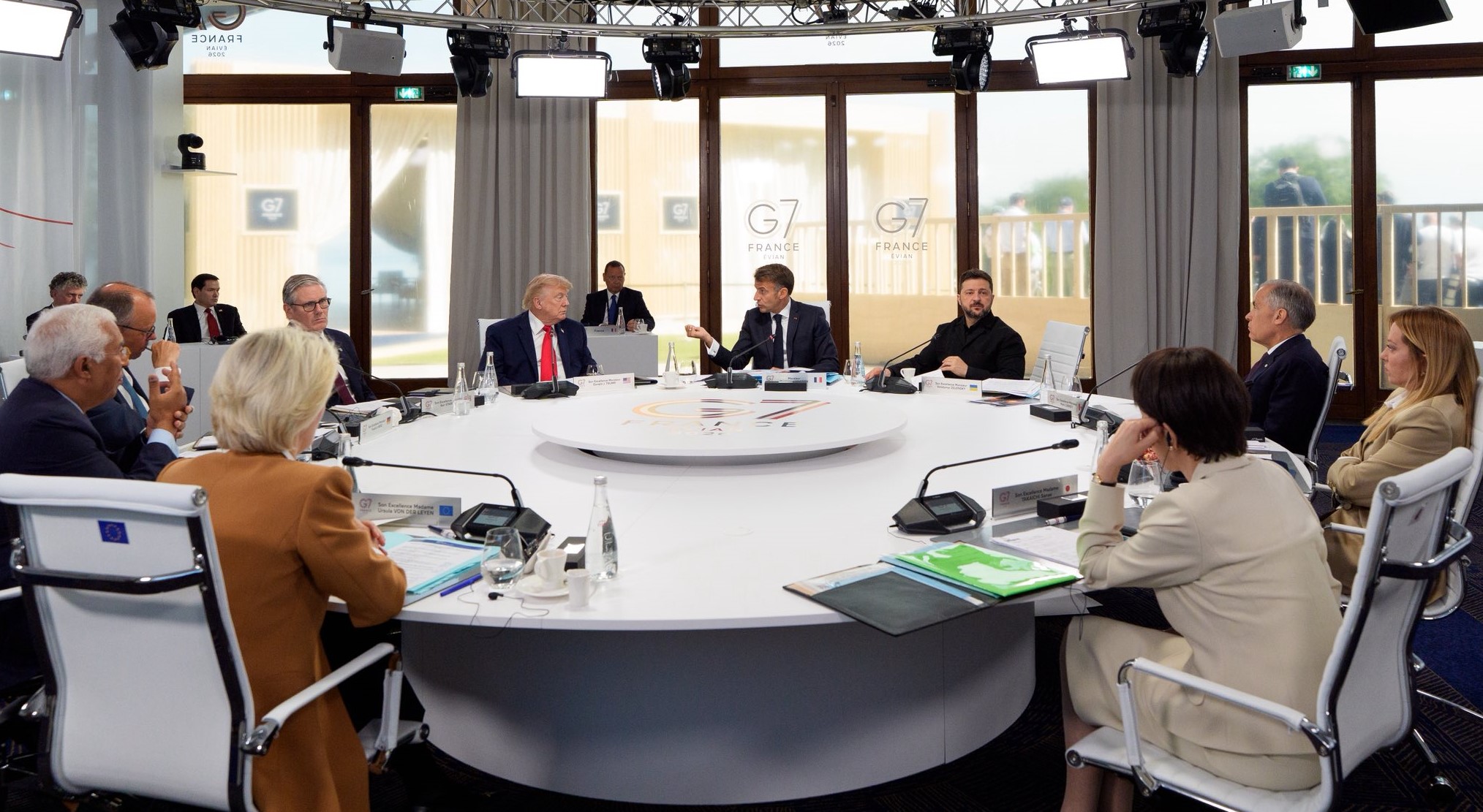
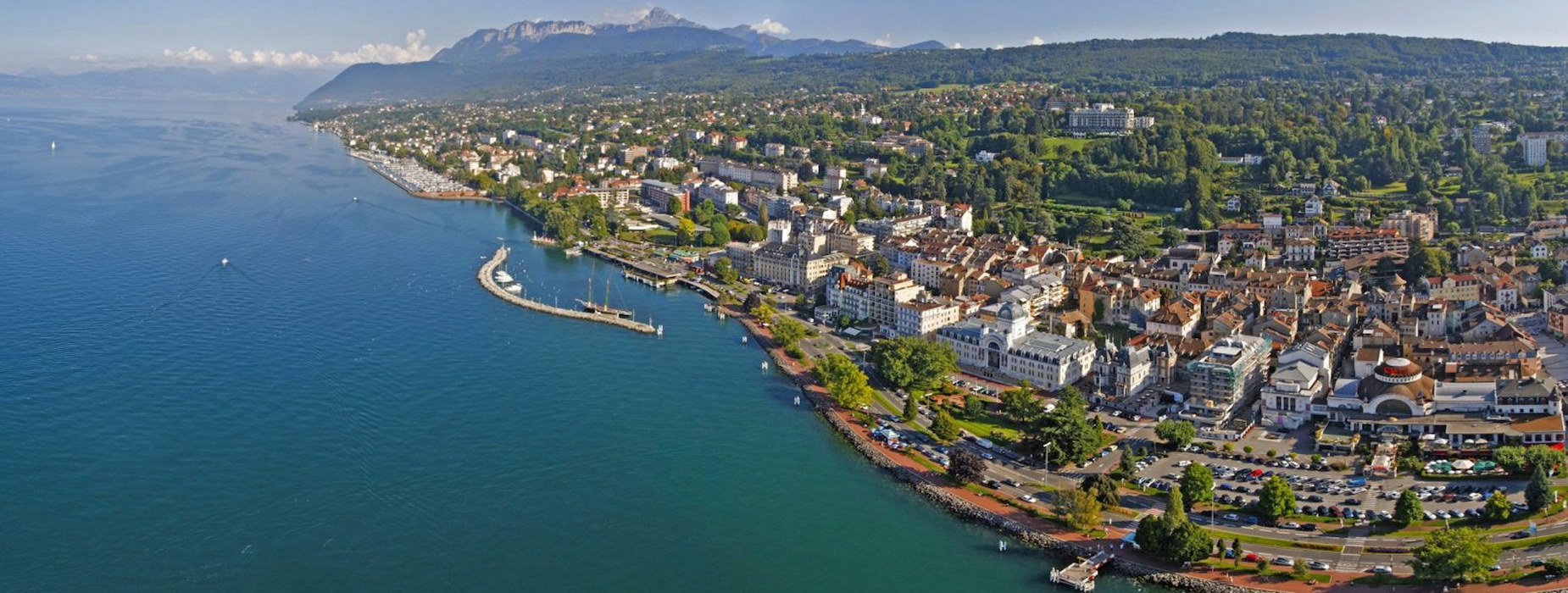
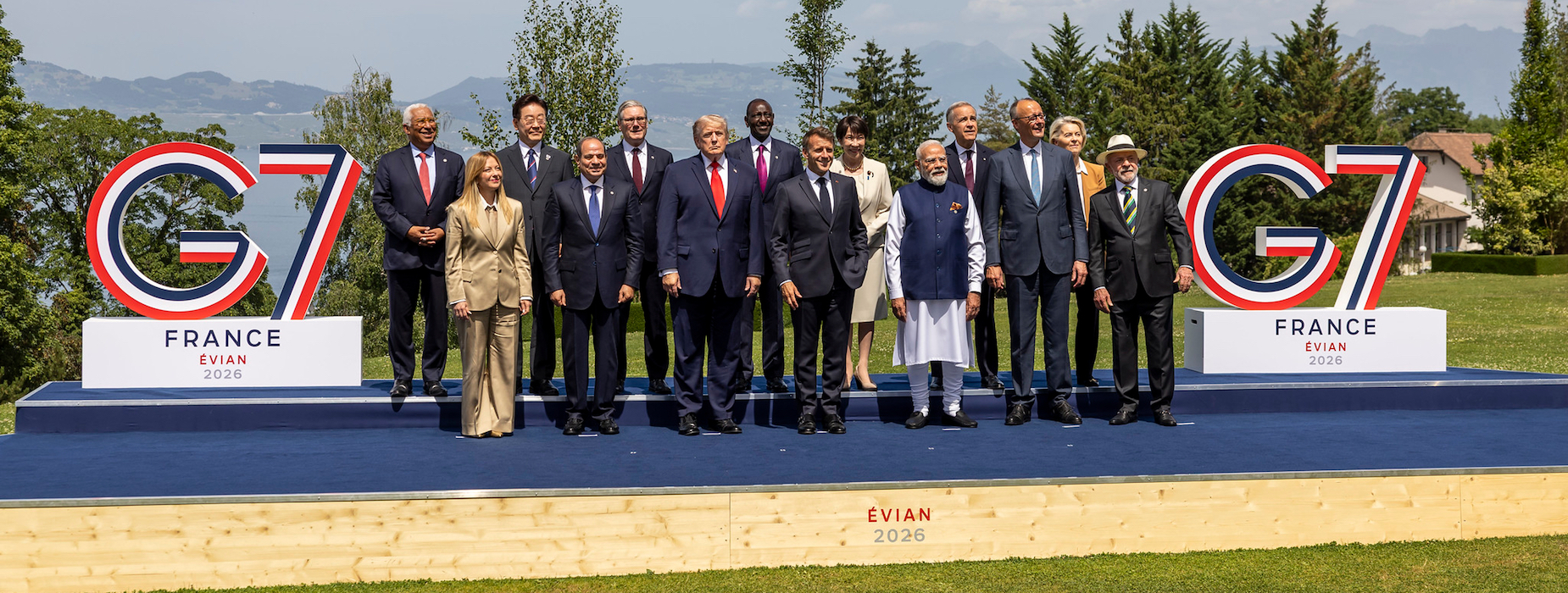
The 2026 G7 Summit was held in Évian-les-Bains, France, from 15–17 June. Compared with the more fractious 2025 Summit in Kananaskis, Canada, G7 leaders emphasized “unity” and issued a series of joint statements covering Ukraine, Iran, migration, development, health, and economic resilience issues.
U.S. President Donald Trump’s performance at the Évian G7 was one of the most closely watched aspects of the meeting because many leaders arrived expecting potential disagreements over Ukraine, Iran, trade, and multilateral institutions as witnessed in the previous year, and topped off by his early departure that year. By most accounts, Trump was more engaged and visibly less confrontational than many European officials had anticipated. Rather than openly challenging the G7 Summit process, he participated in the leaders’ sessions and ultimately joined the major communiqués on Iran, Ukraine and on other issues.
However, that does not mean he suddenly embraced traditional G7 consensus mechanisms. Trump’s interventions generally emphasized his trademark “transactional diplomacy,” direct leader-to-leader negotiations, U.S. national interests over multilateral commitments aka “America First,” and demands for burden-sharing by allies. As the world has now adjusted to his approach and style, this year it was possible to come to consensus on many issues at Évian.
Key outcomes
Perhaps the most significant political takeaway was that the summit ended with considerably more G7 leader consensus than many diplomats expected beforehand, especially on Iran and Ukraine.
The summit’s three most important outcomes were:
— Endorsement of the U.S.-Iran Memorandum of Understanding (MoU) signed June 17, and a commitment to help implement it.
— A stronger-than-expected unified statement on Ukraine, including plans for additional pressure on Russia.
— A growing focus on long-term strategic competition with rivals, combined with increased cooperation among G7 members on economic security, AI governance, critical minerals, and supply-chain resilience.
The Middle East and Iran
In what was arguably the biggest diplomatic development at the summit, G7 leaders formally welcomed the newly announced U.S.-Iran MoU, also called the Islamabad Memorandum, championed by President Trump and described it as an opportunity to prevent Iran from obtaining a nuclear weapon while addressing concerns over Iran’s ballistic missile activities and regional influence. The leaders stated they were prepared to assist with implementation of the agreement.
One notable aspect was that European leaders largely avoided public criticism of the agreement and instead focused on how to broaden and implement it. This marked a significant shift from the tensions that often characterized Iran discussions in previous years and what is already known about their personal views of the 2026 war in which they were essentially sidelined and sometimes ridiculed by Trump.
Summarizing the G7 Leaders’ communique on geopolitical issues, the top regional points of emphasis were: (1) Strong support for the framework U.S.-Iran MoU; (2) Continued concern about Iran’s missile program and regional activities; (3) Heavy focus on protecting energy supplies and maritime traffic through the Strait of Hormuz; and (4) The recognition that stability in the Gulf is important for global energy markets.
The Lebanon issue remains a spoiler as almost every country other than Israel supports an immediate ceasefire. It is mentioned multiple times in the Islamabad MoU (which Israel had no role in negotiating) as well as in a paragraph in the G7 leaders geopolitical communique specifically supporting the disarmament of Hezbollah. While everyone hopes for peace in Lebanon, Washington’s apparent acknowledgement of Tehran’s direct political influence in Lebanon through Hezbollah may well qualify as the worst diplomatic concession of the Trump era.
Trouble for Trump as his up-front concessions to Iran exposed
Trump’s health itself became a major focus for some media outlets, in some cases pulling the focus away from the 80-year old U.S. President’s major geopolitical objectives. Fortunately no major incidents occurred.
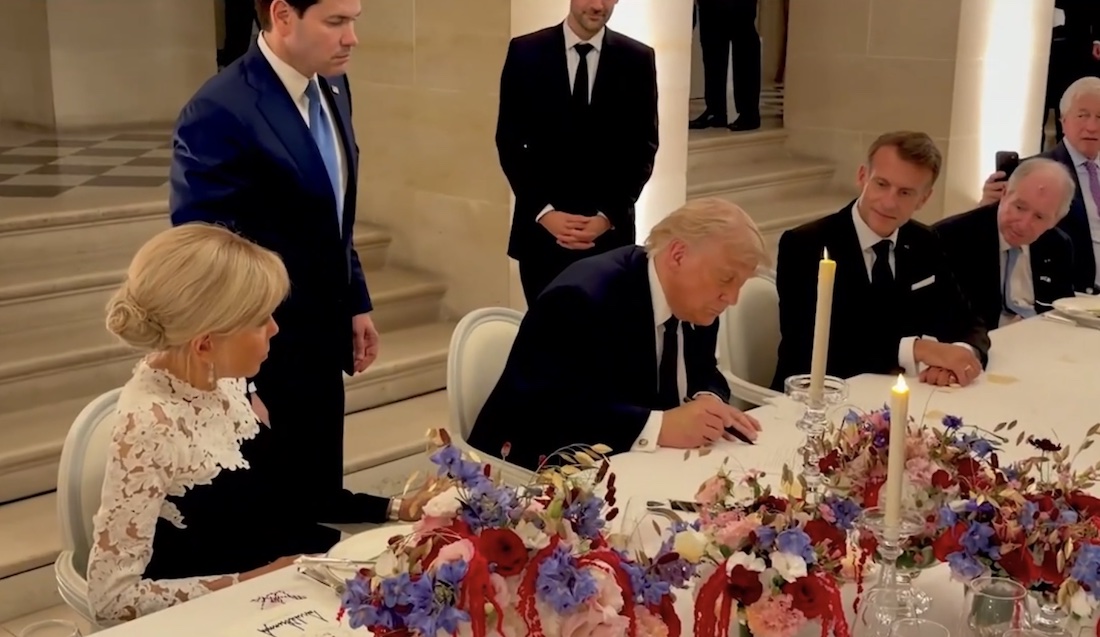
It is fairly clear that President Trump actually came to Évian in need of allied support. The U.S.-Iran MoU, itself released to the public during the summit and finally signed by both sides remotely on June 17, with Trump himself at a banquet in Versailles, was impossible to portray as a U.S. “victory” since the signed agreement did not fully restore the regional situation to its pre-war (February 27) position, handing Iran important strategic gains.
Washington’s concessions, although clouded by what looks to be intentionally imprecise language, in effect begin removing the economic sanctions that were put in place to suffocate Iran’s nuclear ambitions, simply in exchange for Iran’s promise to reopen the Strait of Hormuz. Even before the MoU text was released, highly critical articles, analyses and social media posts were emerging almost geometrically, to the point that it was impossible for the Trump administration to discount all of the material as fake news, as much as that is still being attempted by the White House.
Simply put, the Islamabad MoU will gradually reopen the Strait of Hormuz over the next 30 days as demining proceeds while the U.S. naval blockade will proportionately diminish. Talks on key issues, principally the Iranian nuclear program, which should have started on June 19 but are actually beginning on June 21, have an initial 60-day time limit which can be extended as needed.
This provision gives Trump exactly what he required in order to end the war, the flexibility to extend the complex technical talks through and past the November U.S. mid-term election period, assuming the ceasefire holds and Hormuz navigation opens fully, allowing energy prices to drop, with concomitant political benefits for Trump’s favored congressional candidates in November. However, few analysts think it will be enough to reverse already widely visible negative opinion trends facing the Republican Party.
The MoU does feature a number of front-loaded economic concessions to Iran that can be expected to cost the Trump administration dearly and are being interpreted globally as evidence of America’s strategic decline under Trump. Many analysts see these concessions as unjustified, and a number interpret them as proof of the U.S. President’s total desperation to end the war.
Sanctions termination The MoU’s paragraph 7 states: “The United States of America undertakes to terminate all types of sanctions against the Islamic Republic of Iran, including the United Nations Security Council resolutions, IAEA Board of Governors resolutions, and all unilateral U.S. sanctions, primary and secondary, in an agreed upon schedule as part of the final deal. The Islamic Republic of Iran and the United States of America acknowledge the critical importance of the sanctions termination issue above mentioned and express their intentions to immediately address these issues in the negotiations in order to achieve mutual agreement on them.”
This sanctions paragraph is well thought out and completely acceptable as it allows Washington to link Iran’s performance on all open issues to any incentives provided in terms of sanctions relief. In essence this is the only paragraph regarding economic issues that should have been included in the Islamabad MoU, and it is a major diplomatic mistake by the Trump administration to have gone into further detail in the following sections, and it was a mistake to have allowed the Pakistani mediators to include more.
Oil trade “The United States of America undertakes that immediately upon the signing of this MoU, and until the termination of sanctions, the U.S. Department of Treasury will issue waivers for the export of Iranian crude oil, petroleum products and derivatives, and all associated services including banking transactions, insurances, transportation, etc.” This is the full paragraph 10 of the signed MOU, and Iran is now able to export oil to many, but not all, countries without having satisfied any of the nuclear weapons development concerns that triggered the original sanctions.
Frozen funds “The United States of America undertakes to make fully available for use, the frozen or restricted funds and assets of the Islamic Republic of Iran upon the implementation of this MoU. The United States of America and the Islamic Republic of Iran will mutually agree on the procedures related to the release of these funds during the negotiations.” This is the first half of paragraph 11 of the document.
The unclear language “upon the implementation of the MoU,” and reference to further negotiations means that Iranian funds are not going to be released immediately and this gives Washington at least some leverage in the initial talks. Even so, if the U.S. military’s victory was as overwhelming as Trump claims, how did this Iranian demand even make it onto the discussion agenda and then survive into the signed MoU? See the full MoU text linked above.
Iran reconstruction The MoU’s paragraph 6 states: “The United States of America undertakes, with regional partners, to develop a definitive mutually agreed plan with at least USD 300 Billion, for the reconstruction and economic development of the Islamic Republic of Iran. The mechanism for the implementation of this plan will be finalized as part of final Deal within 60 days. All required licenses, waivers and permissions needed for the relevant financial transactions will be granted by the United States of America.”
As could be expected, Trump came under massive fire at home immediately for agreeing to this and has already stated the U.S. will not be contributing. Fortunately, the situation is not as bad as it looks because ultimately Trump’s negotiators, Steve Witkoff and Jared Kushner, will be hoping to strongarm the Gulf Arabs to support/fund the plan which will undoubtedly be managed by Trump/Witkoff/Kushner cronies in Washington for a sizeable fee, most likely under the aegis of the U.S. Development Finance Corporation (DFC) or even the so-called Board of Peace via Trump-approved subcontractors. The major question one needs to ask is why this Iran-only plan did not also include support for the major reconstruction needs of the Gulf Arab states pummeled by Iran, and Trump’s negotiators should be called to explain their reasoning before the U.S. Congress. This agreement defies all logic.
Ukraine: Stronger than expected support from all parties
Ukraine may be the Évian Summit’s biggest winner, emerging with a strong statement of support from the Western leaders despite President Volodymyr Zelenskyy failing to secure a full bilateral meeting with President Trump. This year, Trump aligned himself with the final Ukraine statement rather than distancing the United States from it, widely seen as a politically important development.
The summit did not produce a breakthrough peace plan, but it reinforced the message that Russia remains under economic pressure and that Western support for Ukraine continues.
Zelenskyy attended discussions dedicated to European security and Ukraine’s defense. The G7’s declaration on geopolitical issues strongly supported Ukraine’s sovereignty and territorial integrity.
G7 leaders pledged to accelerate deliveries of air defense systems, to provide further support for Ukraine’s energy infrastructure and to strengthen sanctions against Russia. They also said they were “ready to consider” granting Ukraine licenses for military production, a critical point since Ukraine badly needs more U.S.- origin Patriot anti-ballistic systems to fend off Russia’s increasingly relentless bombardment. Trump did not actually approve the idea, but agreed to review it. Considering the low levels of U.S. interceptor missile stocks after the Iran war, Trump could well accept the idea of expanding allies’ interceptor production capacity.
In Évian, Trump stated that Washington might “soon” reinstate sanctions on Russian energy exports, which were temporarily waived in recent months to ease the global energy crunch triggered by the war in Iran. Also, for the first time, President Trump stated that it is Russia, not Ukraine, that “should make a deal.”
Wide set of global issues debated
The grab bag of global issues covered at G7 meetings in many ways parallels the United Nations. So-called G7 “Sherpas” essentially spend most of an entire year preparing agendas and finalizing agreed G7 declarations, many of which are posted and forgotten by all except a few analysts in less than a month after the annual summits. When it comes to the large number of single subject declarations issued, it is likely G7 leaders themselves spent little or no time debating/negotiating on various topics, allowing their support staff to manage the matters. Some of the topics below, however, got their full attention.
Strategic minerals independence
Although China was not the headline issue and rarely named, it was a major topic behind the scenes. The G7 leaders discussed strengthening supply-chain resilience, coordinating stockpiles of materials such as lithium and nickel, reducing dependence on Chinese-controlled critical mineral supply chains and promoting “balanced and sustainable growth.”
At the Évian Summit, AI received unprecedented attention. Executives including OpenAI’s Sam Altman and Dario Amodei of Anthropic participated in discussions on AI governance, liability and accountability, information integrity as well as economic opportunities and risks from advanced AI systems. Altman urged the G7 to take control of AI governance emphasizing that it was for democratic governments — not AI companies — to decide how it is governed. “We develop the technology, and the citizens of the free world make the rules,” he declared
The G7 also reaffirmed support for development finance, infrastructure investment, and partnerships with developing countries as an alternative to dependency on major-power financing. They produced a separate statement calling for expanded multilateral cooperation to advance economic growth, resilience and development, to deliver shared prosperity.
The G7 adopted declarations focused on combating migrant smuggling networks, countering human trafficking, strengthening border management and disrupting transnational criminal organizations.
On health, G7 leaders also issued statements on coordinating a response to the Bundibugyo Ebola outbreak, cancer prevention and treatment cooperation and global health preparedness.