

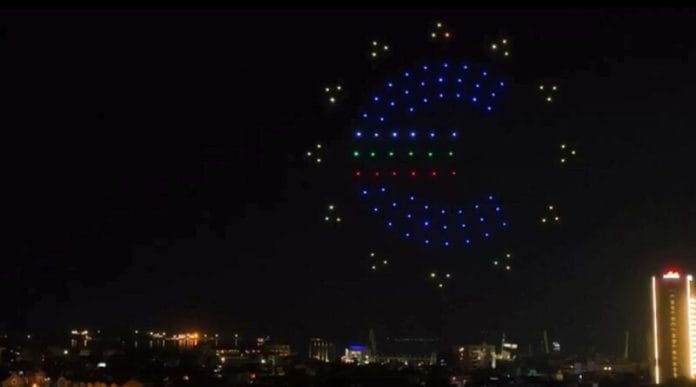

Bulgaria officially adopted the euro on January 1, 2026, becoming the 21st member of the eurozone. The transition began with the lev circulating alongside the euro through January, after which the euro becomes the country’s sole legal tender from February 1, 2026.
This was no magic act by EU technocrats; it was the culmination of years of preparation. Bulgaria formally entered the EU in 2007 and at that point committed to eventually adopting the euro. After the now-standard formal deliberations for new eurozone members, EU institutions formally approved Bulgaria’s accession in mid-2025, paving the way for adoption this year.
Bulgaria joined the Exchange Rate Mechanism II (ERM II) in 2020, a formal precursor to euro adoption. Both the European Commission and the European Central Bank (ECB) confirmed in 2025 that Bulgaria met the macroeconomic convergence (Maastricht) criteria — including price stability, public finances, and exchange rate requirements.
Economic adjustment questions remain
As one would expect, ECB President Christine Lagarde called Bulgaria’s euro accession a “powerful symbol for Europe.” Many businesses and economists anticipated that, since the Bulgarian lev was pegged closely to the euro since 1999 by law, at a fixed rate of one lev for every 51-euro cents, the short-term economic disruption would be limited. Some of the expected gains include:
–Greater predictability and access to European capital markets.
–Deeper integration into the EU single market and removal of currency conversion costs, especially for exporters and businesses. Readers should recall that Bulgaria entered the Schengen zone in all aspects at the start of 2025, easing cross-border transport links and related costs with Greece and Romania (however, Romania is still outside the eurozone).
–The Governor of the Bulgarian National Bank will become a full member of the ECB Governing Council. According to Yasen Georgiev, Executive Director of the Economic Policy Institute in Sofia, “Bulgaria will be participating directly in interest-rate decisions, quantitative easing/tightening, liquidity operations and Euro-area crisis responses. In this way, the country will move from its role as a policy-taker (aligning with ECB policy via the currency board, which has been in place since 1997, initially with a currency pegged to the Deutsche Mark) to a policy-shaper. Thus, for Bulgaria turning from de facto member of the euro area into a de jure member has a strong symbolic and political importance.”
Georgiev elaborated, “However, the impact on European economic decision-making will be rather limited since Bulgaria’s membership will not radically change the balance of power. Voting in the ECB’s Governing Council will include 21 national central bank governors but voting is based on a rotation system that gives larger economies more frequent voting rights.”
Too early to classify the transition as a success story?
The political and social dimensions — public trust and corruption, price perceptions, and lack of political stability — show mixed signals, meaning long-term success of the euro adoption will hinge on how these issues evolve.
Opinion polls at the end of 2025 indicated significant portions of the population remain worried about price increases and loss of economic sovereignty. Support for the euro hovered below majority levels in many surveys.
Despite the belated start in the government’s euro information campaign, the last several months witnessed tangible progress in the dissemination of details regarding the currency changeover. Economist Georgiev explained that the information campaign “has not succeeded so far in improving the general knowledge about the euro banknotes. Elderly people and people from smaller settlements seem to be confused by the outlook of the two euro banknote series that have some visual differences.”
Concerns about inflation and living costs remain — even though formal criteria were met (e.g., inflation held at around the required convergence criteria levels through mid-2025 but has rebounded slightly), many citizens fear everyday prices could rise following the switch, having seen examples of large price surges due to the upwards rounding of prices largely by merchants in next-door Greece two decades ago. Also, social media has spread disinformation such as false claims that the euro could lead to confiscation of bank accounts, something exploited by nationalist and pro-Russian groups, all working to undermine Bulgaria’s support for the Ukraine war effort.
In terms of regional impact, Georgiev told NE Global that “Bulgaria’s euro adoption is likely to act as a signal to other non-euro countries and contribute to triggering domestic debates there — for instance in Romania where the news on the euro adoption in Bulgaria is reported to have resonated actively among local political elites.”
Government stability question
It should not be forgotten that Bulgaria will be the first country in the euro area that has introduced the new currency with no government in power and no state budget approved for 2026. Bulgaria is currently being administered by outgoing PM Rosen Zhelyazkov. President Rumen Radev will later this month appoint a caretaker team. New elections are predicted for March or April 2026 but have not been formally announced.
Bulgaria’s minority coalition government resigned on December 11, led at that point by the center-right GERB party. The resignation was announced minutes before parliament was scheduled to vote on a no-confidence motion tabled by the opposition over economic mismanagement and supported by growing public anger with widespread corruption.
The demonstrations on December 10, which provoked the government’s resignation, came after the previous week’s protests that were sparked by the coalition government’s budget plans for higher taxes, increased social security contributions and spending increases. The government later withdrew the contentious 2026 budget plan.
Former Prime Minister Zhelyazkov’s government survived six votes of no confidence since it was appointed in January 2025, but in December the large turnout of protesters on the streets was a game changer.