


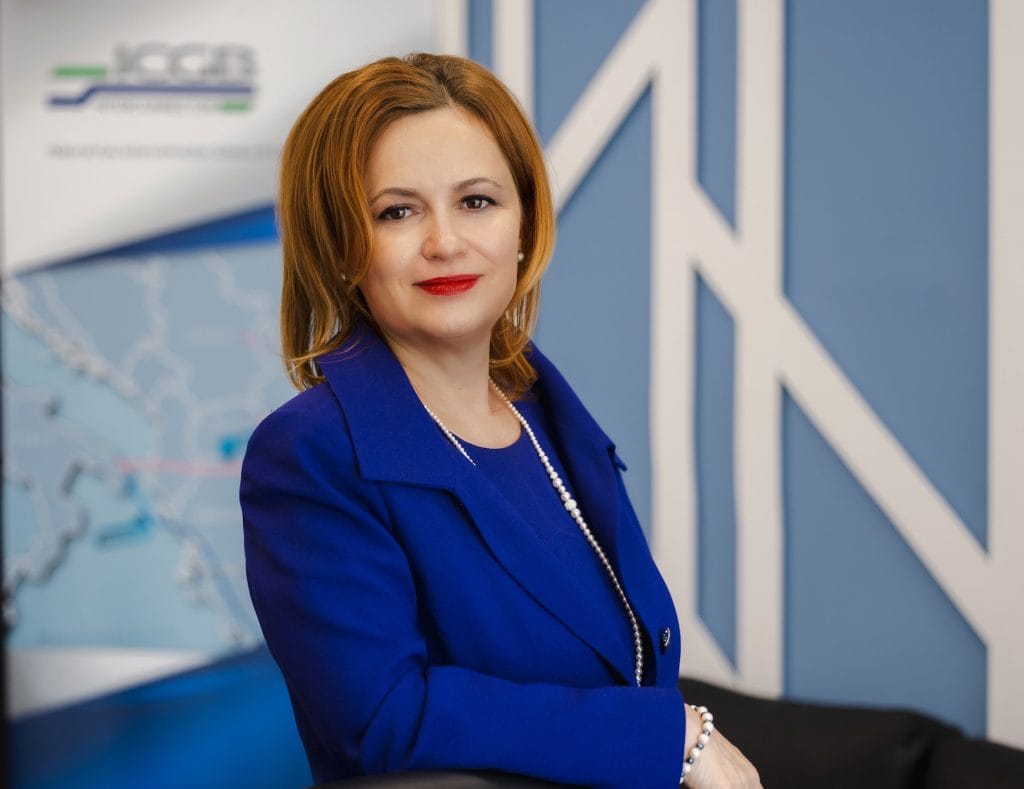
Teodora Georgieva, Executive Officer and Board Member of the Gas Interconnector Greece-Bulgaria (ICGB) AD, spoke to NE Global in an exclusive interview about the reverse operation of the Trans-Balkan Pipeline, the Greece–Bulgaria Interconnector’s (IGB) critical role in the Vertical Corridor in the current geopolitical context, gas supplies to Moldova and onward to Ukraine and attracting LNG network users.
NE Global: After the November P-TEC session in Athens it seems the media frenzy we all witnessed was little more than the repetition of the mantra “gas for Ukraine via Alexandroupolis.” We know the story is more complicated, so let us cover a few key points: Gas has been flowing north along the Greece–Bulgaria Interconnector since late 2022, well before the Alexandroupolis FSRU (Floating Storage and Regasification Unit) initiated operation. Where was the first gas being shipped to, and where was its point of origin?
Teodora Georgieva: Following the start of commercial operations of IGB in late 2022, the first volumes transported through the interconnector were primarily Azerbaijani natural gas, delivered under the long-term contract between AGSC and Bulgargaz, sourced from the Shah Deniz II field.
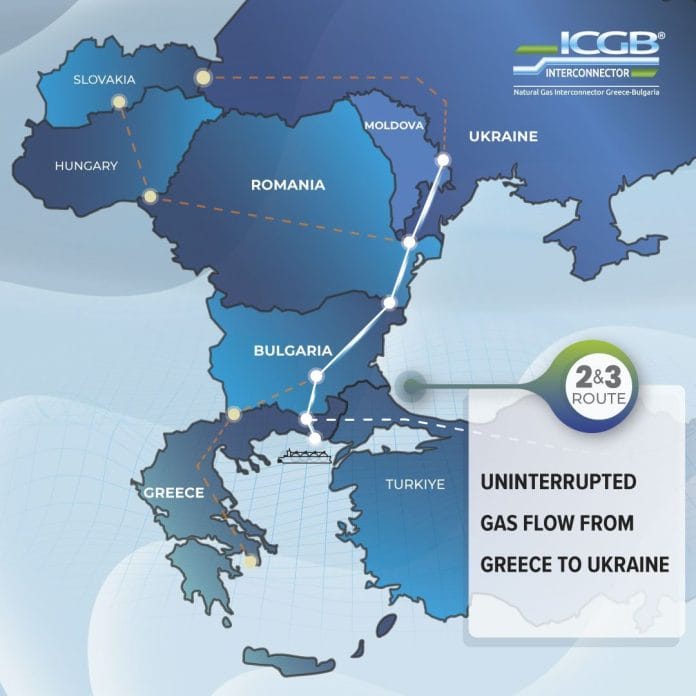
At the same time, the commissioning of IGB enabled, for the first time, the reverse operation of the Trans-Balkan Pipeline, allowing substantial volumes to flow northwards. During the winter of 2022–2023, this infrastructure configuration supported deliveries to Moldova, demonstrating the operational flexibility of the regional network and the importance of interconnectivity during periods of heightened demand.
This proved IGB’s relevance and strong regional effect almost immediately – and this is a role we look to expand even more with our project for the pipeline’s capacity expansion. From my perspective as Executive Officer, having overseen all processes over the past 10 years – from securing funding, procurement, construction, and launch – the capacity expansion is the next major milestone for IGB. Our team firmly believes in this strategic step.
Since 2023, I have actively advocated for this as a long-term initiative, and I am pleased to share that we have already achieved significant progress: the construction permit for the Bulgarian section is finalized, the contractual strategy is in place, and the procurement package is ready for corporate approvals. We have developed all necessary processes to act immediately on the procurement launch.
Meanwhile, we are positioned to take the Final Investment Decision (FID), especially if we receive a subsidy from an American fund or other sources that will secure the competitiveness of the route – given the huge importance of the Vertical Corridor and IGB’s crucial role in strengthening regional energy security and connectivity.
NEG: In the first year of the Ukraine war, were there any special difficulties in approving these transactions?
TG: The period was characterized by urgency and an exceptional market environment. Approvals required close coordination between transmission system operators and national regulators, as well as strict compliance with European regulatory frameworks.
While the context was complex, the relevant authorities and operators worked within existing rules to ensure that transactions were approved in a timely and transparent manner, enabling secure deliveries through available infrastructure. I think we were all driven by our professional roles in the process but also felt deeply the emotional aspect of what a new war in Europe means. I believe it won’t be an overstatement if I say that everyone was and still is motivated to support an ally and a democratic, friendly nation.
NEG: At what point in time did shipments into Bulgaria along the IGB begin to encounter interference from political or business interests?
TG: With the growing recognition of the Vertical Gas Corridor’s strategic role, the development process took place in an increasingly sensitive and closely observed context. Still, ICGB’s attention is focused on providing transparent, non-discriminatory access to the pipeline’s capacity and applying the same rules to all users. Introducing new products – Routes 2 and 3, is crucial and further strengths the geopolitical significance of ICGB’s infrastructure, especially for routes to Moldova and Ukraine during challenging winter conditions. Our work, together with all TSOs under the Vertical Gas Corridor, is focused on real, impactful actions that prove solidarity and the importance of connectivity and integration of key infrastructures.
NEG: There is some media reporting hinting that Gazprom-linked interests have been working behind the scenes to impede development of the so-called Vertical Corridor to points north of Romania and even to Ukraine – positive news that was celebrated so loudly at the November P-TEC meeting. What has really been happening?
TG: The November session validated and legitimized the unique cooperation behind the Vertical Corridor and its innovative route products which will be critical as Russian gas is being phased out by 2027–2028. Routes 2 and 3 that include the IGB pipeline, alongside the already approved Route 1 (from Komotini, Greece, to Stara Zagora, Bulgaria), represent new solutions that can attract LNG network users from the U.S. and other destinations, reinforcing diversification and energy security. We expect American LNG flows via Alexandroupolis after the activation of Route 2 and Route 3 and the discount we offered – 46 percent below the standard tariff, is a great benefit to that.
The market in Ukraine, with its storage capacity and winter demand, is a natural target. It’s clear that that growing visibility of the Vertical Corridor is not in Gazprom’s interest. With the EU decision to halt Russian gas, alternative access routes will be sought, and Turkey’s role is significant, as gas arriving there becomes “Turkish” regardless of its initial origin. Therefore, strict control is essential to prevent regulatory circumvention and safeguard the Vertical Corridor’s role as a cornerstone of Europe’s diversification strategy.
NEG: If you had the opportunity to advise U.S. policymakers, what do you recommend getting the gas flow, probably mostly from U.S. LNG deliveries, moving steadily to Ukraine this winter and beyond?
TG: I would focus their attention on:
- Monitoring processes and stakeholders analytically and deeply. Integrity and leadership of those managing the Vertical Corridor are critical to its success.
- Supporting individuals who believe in the Corridor as a cause and demonstrate commitment through action.
- Backing the innovative routes (Route 1, 2, and 3) as short-term but strategic goals, ensuring operators, the European Commission, and regulators maintain their validity and support more flexibility in the EU regulation
- Identifying and addressing sensitive points where Russian gas might bypass regulations, preventing loopholes.
- Recognizing that this is a strategic decision at a pivotal moment, opening a 59 bcm (billion cubic meters) market potential for U.S. LNG in Europe – a unique opportunity that must be seized.
- Understanding that timing and people are key assets for executing this corridor successfully.