


Moldovan President Maia Sandu said in a recent media interview that she would support Moldova’s unification with Romania if the Moldovan population voted in favor of this initiative. While this initiative is unlikely to happen, this statement highlights the strong relations between Chisinau and Bucharest (current and historical).
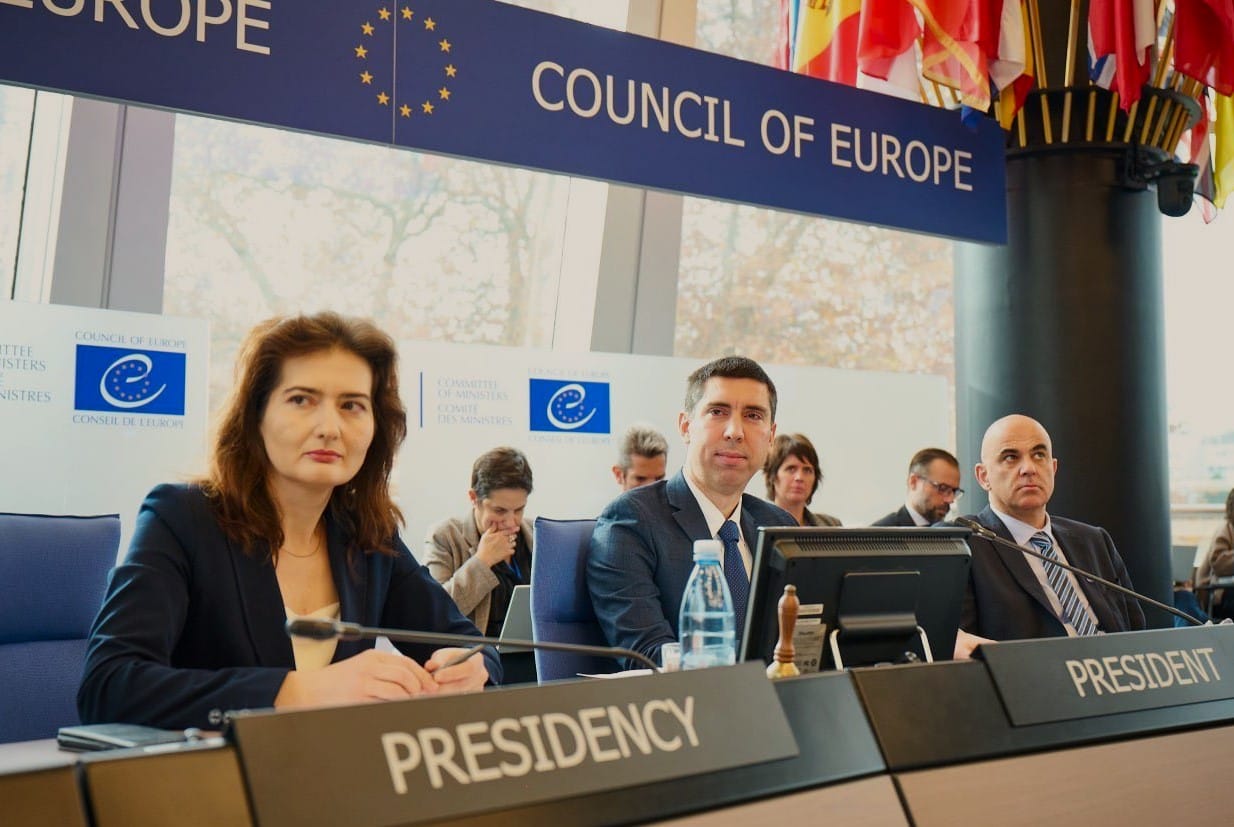
Furthermore, President Sandu’s statement can also be put in the context of Moldova’s growing engagement with Europe. At the end of 2025, Moldova’s Minister of Foreign Affairs and Deputy Prime Minister, Mihai Popsoi, discussed his ministry’s five diplomatic achievements for the year. One new accomplishment is that Moldova is currently the president of the Committee of Ministers of the Council of Europe and will organize a major ministerial summit in May. Moldova’s quest to join the European Union — President Sandu wants her country to join the bloc by the end of the decade — remains steadfast. If the first half of the 2020s can be summarized as Moldova embarking on a European quest, the second half of the decade will cement it.
Recent accomplishments
Moldova’s mandate at the helm of the Committee of Ministers of the Council of Europe lasts for six months, from November 14, 2025, until May 15, 2026. This distinction is a major success for Moldova’s foreign affairs ministry, which will conclude with a meeting in May. “The event will be a major one and will provide the opportunity to strengthen the close ties we have with the Council of Europe’s member countries,” Minister Popsoi told the Moldovan news agency Moldopres.
The small landlocked European nation received another distinction at the beginning of the current year: Moldova joined Creative Europe, the European Union’s flagship program that supports the cultural and creative sectors. Joining Creative Europe (Moldova is the initiative’s 41st member) allows “Moldovan organisations, artists, and cultural professionals” to participate “in the actions published under the Culture strand of the current program, benefiting from EU funding on equal terms with peers across Europe,” explained EU Neighbors East, an EU-communications agency. President Sandu is also regularly invited to speak at international fora; most recently at a special Athens session of the Delphi Economic Forum in mid-December 2025.
The Republic of Moldova applied for European Union membership after the Russian invasion of Ukraine commenced, and the country hopes to join the bloc by the end of the decade at the latest.
Moldovan Politics
The current achievements would not have been possible without the Moldovan population, which elected President Maia Sandu in 2020. She was re-elected for a second and final term in 2024, while a referendum was passed to modify the constitution and add EU membership as a goal. In September 2025, Moldova held parliamentary elections, and Sandu’s Party of Action and Solidarity (Partidul Acțiune și Solidaritate, PAS) retained a majority in the 101-seat legislative body. PAS currently has 55 seats, a small majority, but down from the previous parliament, when PAS had almost 70 seats.
While it is debatable whether Moldova will meet all the EU’s criteria by the end of the decade to qualify for membership, Sandu’s re-election, the referendum’s passing, and the recent elections show that a majority of Moldovans continue to support the government’s EU membership objectives and wish to join the European Union. (There are exceptions, of course; some older Moldovans favor engaging Russia, as do the majority of the Gagauz population).
President Sandu’s recent comments
As for President Sandu’s comments regarding Romania, she stated she would support unification between her nation and Romania if the population voted in favor of it. “It’s becoming increasingly hard for Moldova to survive as a democracy and resist Russia, and the global situation is very dangerous,” she noted, thus integrating with Romania makes geopolitical sense.
Explaining the history of Moldova and Romania would be too exhaustive. Suffice it to say, the two countries and their respective populations have a long, very shared and deeply interlinked history. The territories of the two present-day countries were a single entity in 1859 (the event was called the Little Union) & between 1918 and 1940. Many Moldovans (including President Sandu) have dual citizenship with Romania, and the idea of a unified state has some support among the general population.
Hence, Sandu’s statement in itself is not controversial, as she is simply supporting an idea that is a common topic of discussion within Moldovan politics, and which has been debated since Moldova became independent from the Soviet Union in 1991. At the same time, the statement can be used by political parties and even foreign entities to create division within the country, particularly towards Transnistria, Moldova’s separatist bloc, or the Autonomous Territorial Unit of Gagauzia in the South.
One argument utilized by authorities in Moscow and Tiraspol (the so-called capital of separatist Transnistria) is that Moldovan unification with Romania would destroy the cultural identity of the ethnic Russian, Gagauzian, and non-Romanian speaking population of the country. (The author of this analysis has extensively written about Moldova, including the co-authored book chapter “Moldova’s Transnistria question: Is the term ‘frozen conflict’ still applicable?” for the book Separatism and Regionalism in Modern Europe).
Looking forward
In the grand scheme of things, the presidency of the Committee of Ministers of the Council of Europe and joining Creative Europe, or hosting the 2023 summit of the European Political Community, may seem like small achievements. However, one way to look at these achievements is acceptance: the rest of Europe, both individual states and regional organizations are accepting Moldova as an equal member among their ranks. The goal remains the European Union; however, engagement with other European organizations reinforces the notion that Europe is where Moldova belongs.
Finally, as I wrote in 2023, unification between Moldova and Romania is not on the horizon. Sandu’s statement will delight some sectors of the Moldovan population and reassure Bucharest that Chisinau sees its next-door neighbor as a critical ally. However, the priority for the Moldovan population and government is to join the European Union, not to reunify with Romania — achieving EU membership would make unification with Romania unnecessary in any case.
President Sandu’s recent statements will make the Moldovan diplomatic corps’ job a bit more stressful at the beginning of the year, as Minister Popsoi and Moldovan diplomats in missions throughout the world will have to explain the complex history between Moldova and Romania. However, the ultimate objective of joining the European Union and becoming a respected and equal member of the European community remains steadfast.