

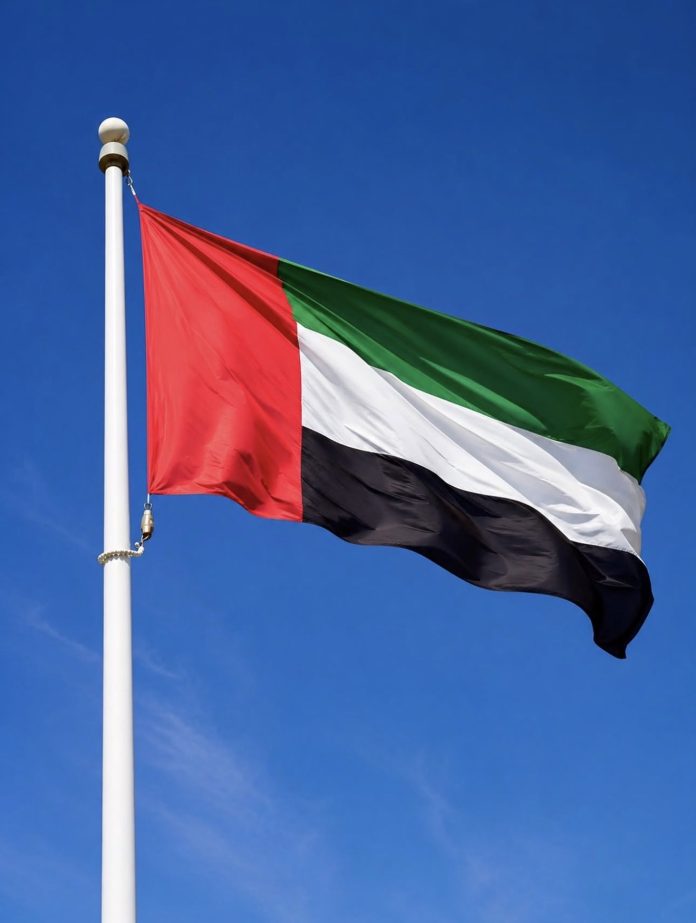

After nearly 60 years of membership, the United Arab Emirates (UAE) announced on April 28 its decision to withdraw from the Organization of the Petroleum Exporting Countries (OPEC) and OPEC+ which took effect on May 1.
“This decision aligns with the United Arab Emirates’ long-term strategic and economic vision and the evolution of its energy sector, including accelerating investment in domestic energy production, while reinforcing its commitment to its role as a responsible and reliable producer looking ahead to the future of global energy markets,” the UAE’s Energy and Infrastructure Ministry said in a post on X.
The UAE said this decision comes following a thorough review of the UAE’s production policy and its current and future capabilities, and in light of what national interests require and the state’s commitment to contributing effectively to meeting the market’s pressing needs, while geopolitical fluctuations continue in the near term through disruptions in the Arabian Gulf and the Strait of Hormuz, which affect supply dynamics, as fundamental trends point to the continued growth of global energy demand in the medium and long term.
The UAE’s decision to exit from OPEC reflects a policy-driven evolution aligned with long-term market fundamentals. We thank OPEC and its member countries for decades of constructive cooperation. We remain committed to energy security, providing reliable, responsible, and…
— سهيل المزروعي (@HESuhail) April 28, 2026
The stability of the global energy system relies on the availability of flexible, reliable, and reasonably priced supplies, and the UAE has invested to meet demand changes efficiently and responsibly, prioritizing supply stability, cost, and sustainability, the Ministry said.
“The UAE has not been happy with OPEC strategy for many years. It has regularly complained about having too low a production/export quota because the other members of OPEC, especially Saudi Arabia, did not take into account the country’s major investment to raise oil production capacity,” Chris Weafer, CEO of Macro-Advisory, the leading independent strategic business consultancy in the Eurasia region, told NE Global on April 28.
He argued that the UAE is now looking past the current crisis and at its recovery strategy. “It does not want to be constrained by Saudi dictated production quotas — as in the past — and will want to pump and export as much oil as it can, especially as its gas facilities have been damaged and will take longer to repair,” he said.
The UAE’s Energy and Infrastructure Ministry said the decision to leave OPEC and OPEC+ comes after decades of constructive cooperation, as the UAE joined OPEC in 1967 through the Emirate of Abu Dhabi, and continued its membership after the establishment of the United Arab Emirates in 1971. During this period, the state played an active role in supporting the stability of the global oil market and enhancing dialogue among producing countries.
“The decision underscores the evolution of sector policies to enhance flexibility in responding to market dynamics, while continuing to contribute to its stability in a deliberate and responsible manner with the lowest global carbon intensity, thereby supporting global growth and emissions reduction,” the Ministry said.
According to Weafer, the other important backdrop to this decision is the steadily cooling relationship between Saudi Arabia and the UAE in recent years. “The UAE is no longer willing to play second-fiddle to Riyadh on any issue. This was seen early this year when Saudi gave the UAE 24-hours to take its troops out of the part of Yemen controlled by forces aligned with the UAE. There is also a major row brewing over the UAE’s alleged support for factions in Sudan. There will be other political disputes in the future as Saudi, under Crown Prince Mohammed Bin Salman, views itself as the major regional power – a view no longer shared in Abu Dhabi,” Weafer said.
He reminded that President Donald Trump has managed to achieve what the U.S. Congress — which has always viewed OPEC as an illegal cartel — has threatened for many decades. His actions in the Gulf have led to what now looks like the end of OPEC, certainly as the power it once was.
“It remains to be seen what Russia will do — probably nothing as it will want to stay close to both Saudi Arabia and the UAE and it has no longer any spare oil capacity,” Weafer said, adding, “For Moscow, OPEC+ was a lifeline after the start of the U.S. shale oil surge in 2016 crushed the oil price. But for Moscow also, OPEC+ has run its course.”
Following its withdrawal from OPEC, the UAE will continue its responsible role through a gradual and deliberate increase in production, in line with demand and market conditions, the UAE’s Energy and Infrastructure Ministry said, adding that thanks to its large and competitive resource base, the UAE will continue working with partners to develop resources, supporting economic growth and diversification.
The UAE stressed that this decision “does not change the United Arab Emirates’ commitment to the stability of global markets or its cooperation-based approach with producers and consumers; rather, it enhances its ability to respond to changing market requirements.”